Discover Christmas Traditions Around the World!

As Christmas approaches, there’s a warmth that fills the air — like the soft glow of fairy lights on a snowy night or the smell of cinnamon and clove wafting from the kitchen.
It’s a time when, no matter where we come from, we’re all wrapped up in the joy of the season, savouring each little tradition that makes it feel like home.
This year, I’m excited to share something truly special with you: I’ve joined forces with a wonderful group of bloggers from all corners of the world, each one sharing a slice of their hometown — or their home away from home.
Together, we’ve gathered a collection of Christmas traditions that are as heartwarming as they are unique, each one a reminder of the different ways we celebrate love, togetherness, and joy during this season.
So, grab your favourite mug of hot cocoa, get comfy, and let’s dive into these Christmas traditions together!
Christmas Traditions In Europe
Ah, Europe sure knows how to do Christmas, and do it well, doesn’t it?
From the twinkling lights of London to the busy Christmas markets of Germany where the air smells like spiced wine and fresh gingerbread, or Italy’s huge family feasts — it is always festive, always warm, and just so full of joy.
Let’s take a wander through Europe’s Christmas traditions and see how Christmas feels in each corner of Europe!
Christmas in Ireland | Nollaig Shona Duit
Shared by Faith from XYU and Beyond

“A few days before Christmas Eve we put on our ugliest Christmas jumper and do the 12 Pubs of Christmas. We walk to at least 12 different pubs and enjoy the craic (party).
On Christmas Eve many will attend a midnight Christmas Mass and join in the caroling.
On Christmas Day when the kids wake up we unwrap presents and then all sit down to a big Full Irish breakfast with boxty (which is a traditional Irish potato pancake made from grated and mashed potatoes) bacon, sausages, black pudding, mushrooms, grilled tomato and any version of eggs and a cuppa tea.
Before dinner, we go and do the 40 Foot Swim at Sandycove which is famous for raising money for charity. The swim is found across Ireland, wherever there is freezing cold water to jump into.
Around five-ish is when we sit down to eat a proper Christmas dinner with all the usual trimmings.
The day after Christmas is called St. Stephen’s Day. This is when the Wren Boys parade through town.
This tradition says the wrens singing betrayed St. Stephen and the Irish soldiers who were hiding.
So the wren is linked to bad fortune and betrayal and boys and men in costume chase and pretend to kill the wren, then parade it through the village.
“My favourite part of the holidays is on January 6th (Epiphany) when the women get to rest and celebrate “Women’s Christmas” or “Little Christmas“, and we get to go to the pub or out for a fancy tea and the men stay home and do all the chores around the house.”
– Faith
Find More Things to Do In Ireland
Christmas in Germany
Shared by Lo Lee from Carry Oner

“Christmas is magical in Germany, and the holiday season kicks off as early as November with one of the most enchanting cultural events I’ve witnessed: Sankt Martin.
On November 11, children carry beautifully crafted lanterns and sing holiday songs as they walk through the streets.
This sweet event honours St. Martin, who shared his cloak with a beggar, symbolizing kindness and generosity, and it sets a spirit of goodwill that leads into Christmas.
The most enjoyable part of Christmas in Germany is attending the beautiful Weihnachtsmärkte (Christmas markets) that pop up throughout December. There, we gather to sip mulled wine (Glühwein) and shop for handcrafted gifts!
Visiting Germany during the Weihnachtsmärkte is amazing, as you get to experience this long-standing German tradition in any major town.
On the evening of December 24th, known as “Heiligabend”, we celebrate Christmas Eve. Families come together for a cosy dinner, often featuring roasted goose, red cabbage, and cookies for dessert.
After dinner, it’s time to exchange gifts around the Christmas tree, marking the end of the Christmas celebrations for the year.”
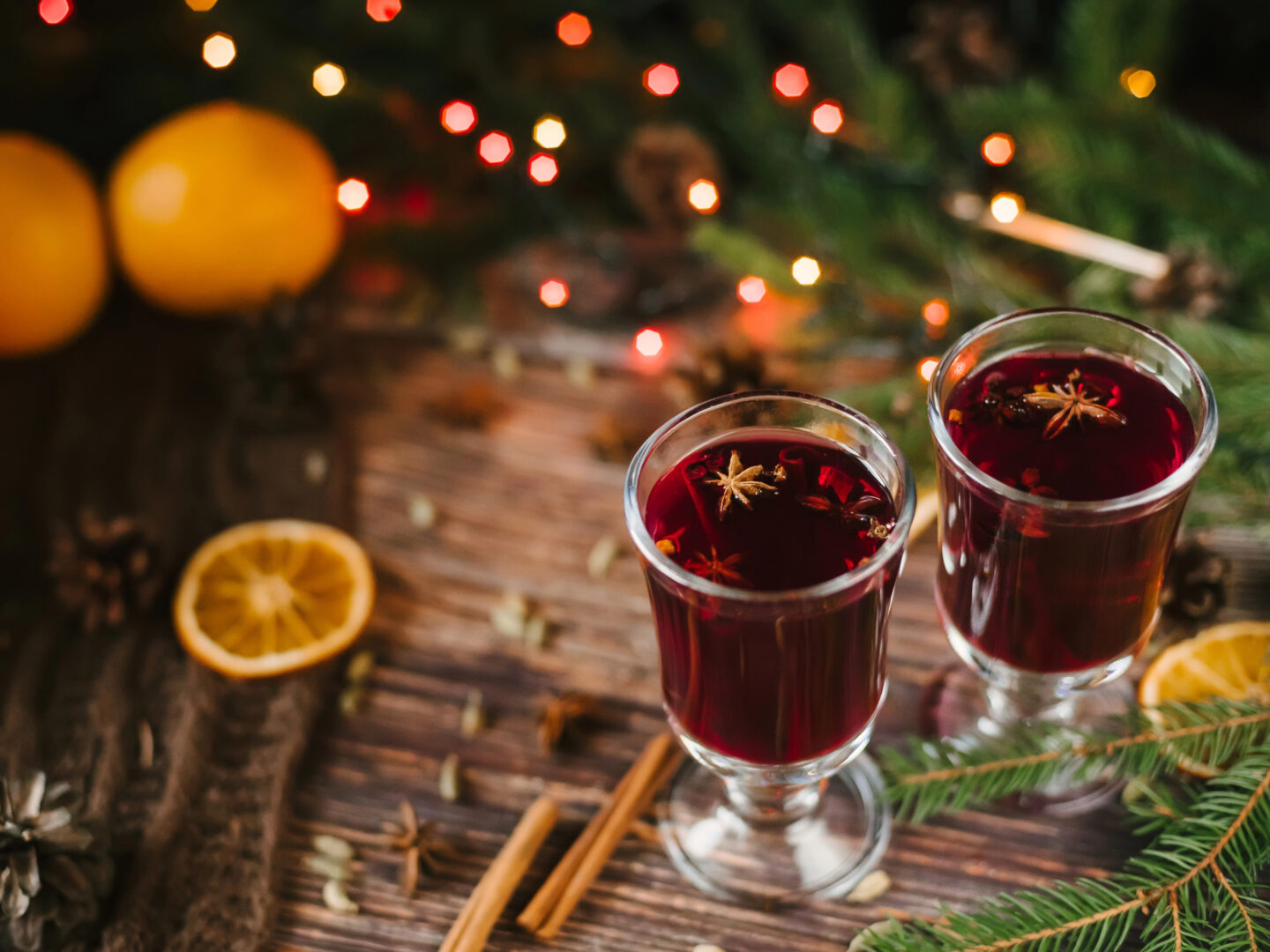
“To bring me closer to Germany’s holiday traditions, my friends built me a Sankt Martin lantern.
Holding that lantern and walking with the singing children is one of my sweetest memories from Germany!”
– Lo Lee
Christmas in France
Shared by Céline from Cpt Lyne
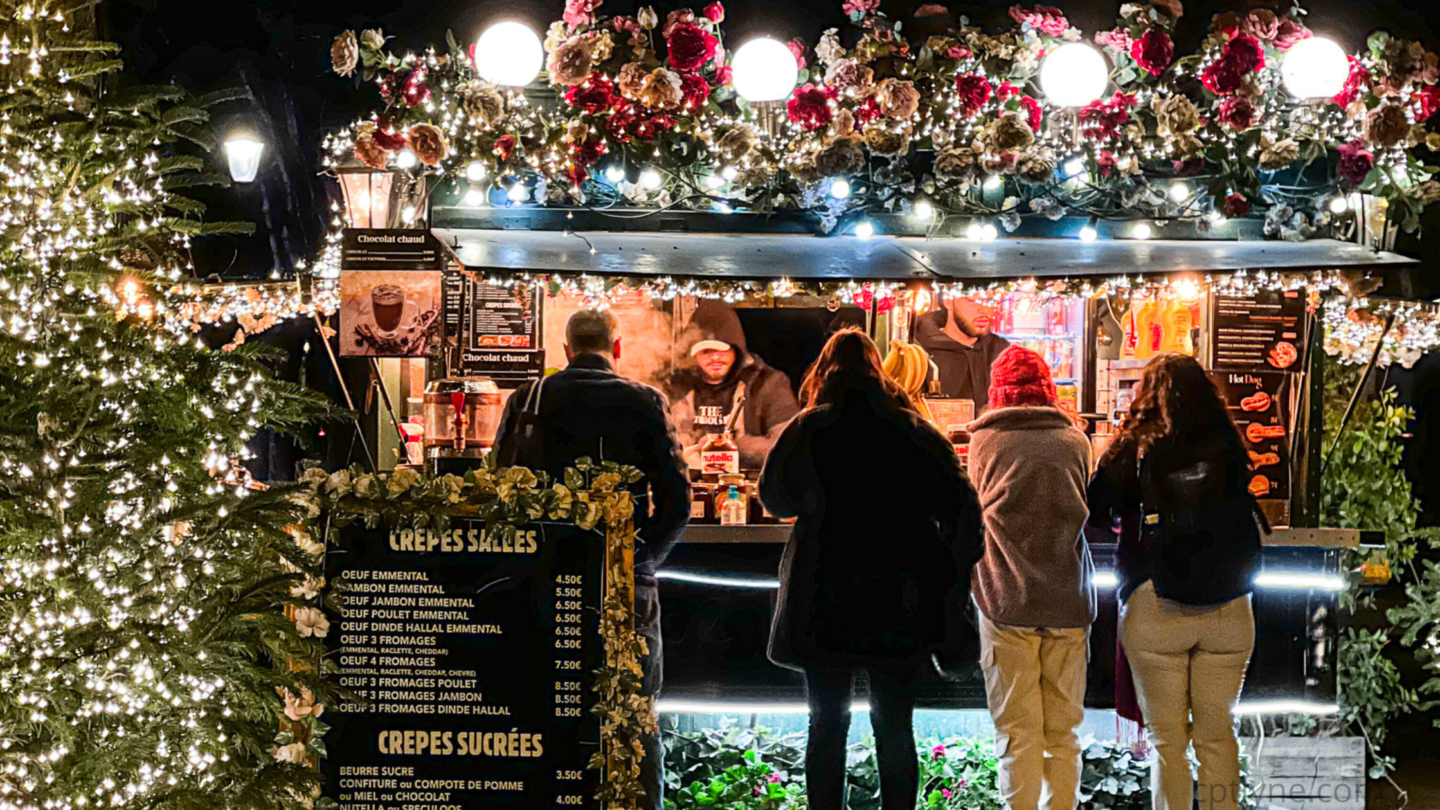
“In France, Christmas is very popular and comes with plenty of traditions and vibrant celebrations! The country sparkles under twinkling lights and festive decorations as early as November.
Christmas is initially a religious holiday. Therefore, some families will set up their “crèche” (Nativity scene), complete with “santons” that represent not only the Holy Family but also local villagers (it stays up well after Christmas until the “Three Kings” arrives).
Christmas in France is celebrated between the 24th and 25th.
On Christmas Eve, people either gather for “midnight mass” in beautifully decorated churches or stay home to enjoy a sumptuous night feast known as “Le Réveillon”.
The traditional menu often includes foie gras, oysters, and roasted poultry. Families without kids also exchange gifts at midnight after the meal and the dessert, traditionally a delicious “Bûche de Noël”, a festive yule log cake that’s as lovely to look at as it is to eat!

On Christmas Day, kids will wake up early to open their gifts, and families will reconnect over a hearty lunch with the same dishes.
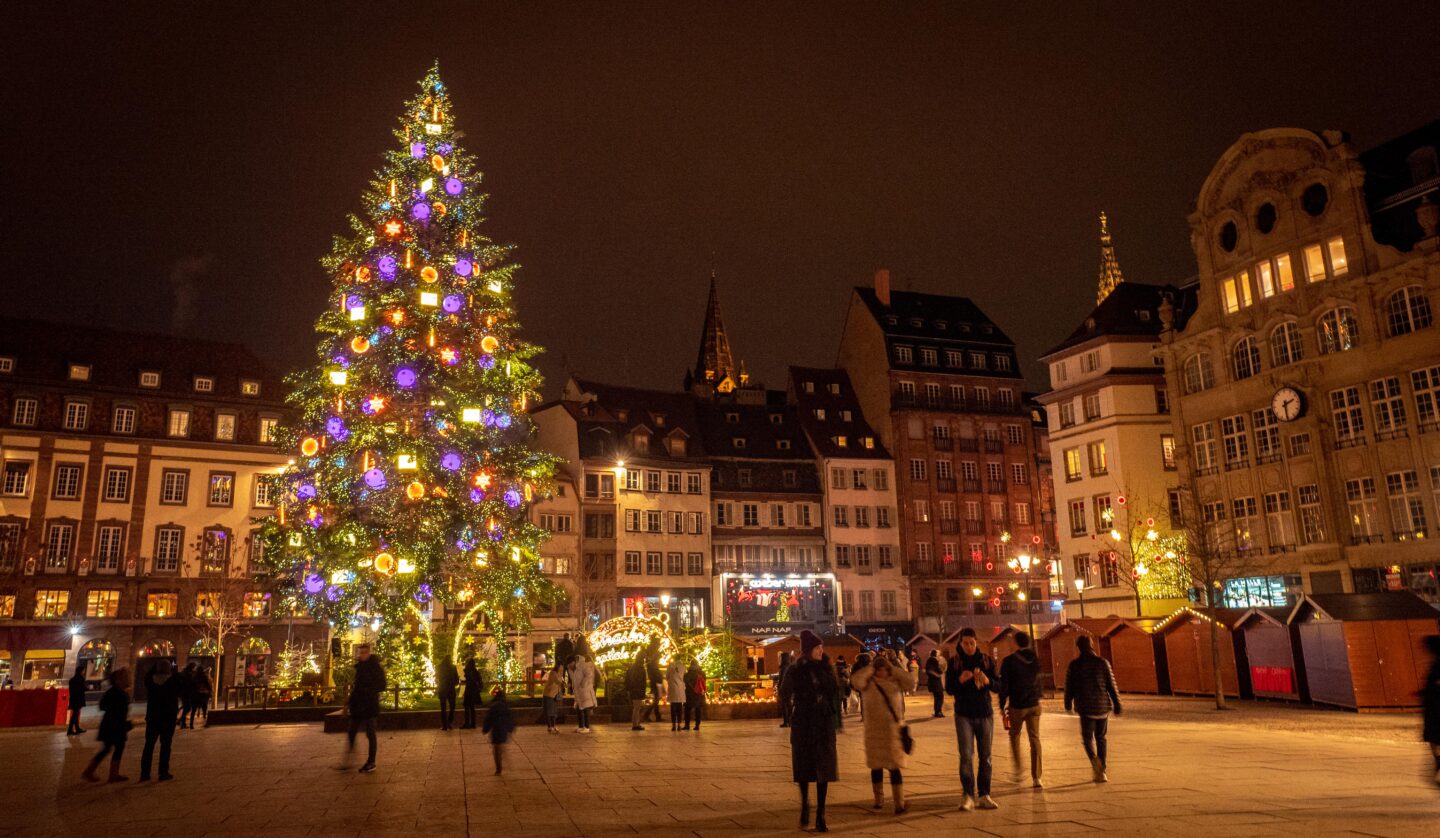
France, especially in Alsace, where the Strasbourg market is a must-see, the festivities continue with charming wooden stalls offering unique handmade crafts.
While shops and restaurants may pause on Christmas Day, they soon reopen to spread post-holiday joy, leading to New Year’s Eve festivities.”
“Visiting France during this magical season can be busy but totally worth it. Most of the biggest cities in France are decorated so beautifully, and walking around with a hot drink and soaking in the Christmas atmosphere is my favourite!”
– Céline
Find More Things to Do In France
Christmas in Portugal
Shared by Ana from Gastro Portugal
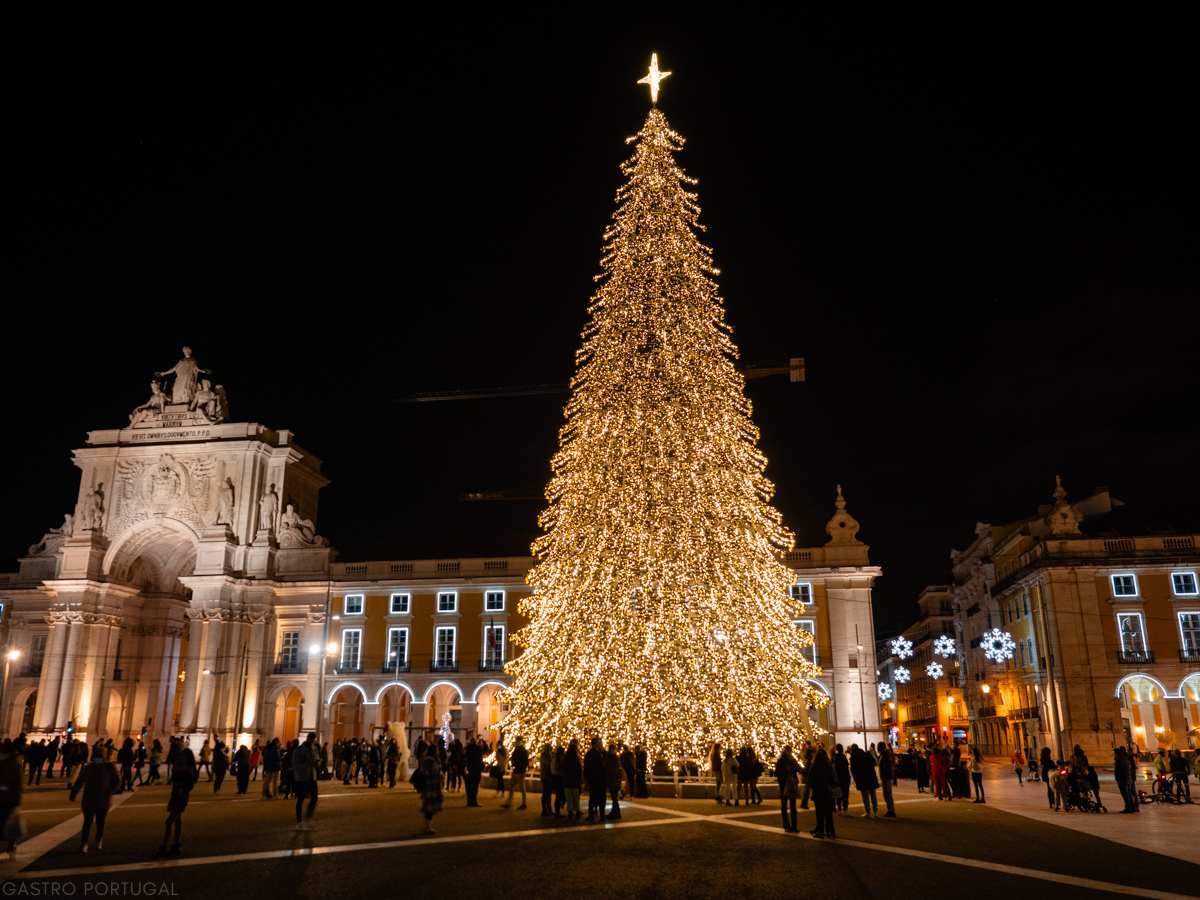
“Christmas in Portugal is a season rich in tradition, family gatherings, and cosy winter warmth.
Starting in late November, cities light up with decorations, Christmas markets, and nativity scenes (presépios). These nativity scenes can be found everywhere from private homes to public squares.
For most families, the main Christmas celebration happens on Christmas Eve or “Consoada“.
Families gather for a late dinner, and if they’re practising Catholics, it will be followed by Midnight Mass. After Mass, families return home to open presents, a tradition often believed to be linked to the arrival of Baby Jesus rather than Santa Claus.
On Christmas Day people gather again for a more relaxed lunch with extended family.
The Christmas Eve meal typically features bacalhau, which is Portuguese salt cod. The most traditional way of serving it is Bacalhau da Consoada, where it is paired with cabbage, potatoes, and eggs.
Dessert is a sweet affair with bolo rei (a festive fruit cake) and a wide range of sweets and pastries featuring classic Christmas flavours like orange and cinnamon.

Christmas in Portugal tends to be a slower, family-oriented holiday, and many shops close early on Christmas Eve, remaining closed through Christmas Day.
Between Christmas and New Year, though, there’s a sense of festivity with some open markets, shopping, and seasonal events.
Portugal’s holiday season is a magical experience for tourists, particularly in cities like Lisbon and Porto, with their beautiful lights, Christmas markets, and cosy cafes serving hot chocolate and seasonal pastries.
Visitors can experience a warm and authentic celebration with welcoming locals and taste traditional Portuguese Christmas food, enjoying the country’s unique take on the festive holidays.
“My absolute favourite thing to do during Christmas in Portugal is to explore all of Lisbon’s Christmas Markets, decorations, and taste the festive delicacies.
Each corner of the city has its own take on Christmas displays and there’s lots to discover!”
– Ana
Christmas in Italy
Shared by Marianne from Galavanting The Globe
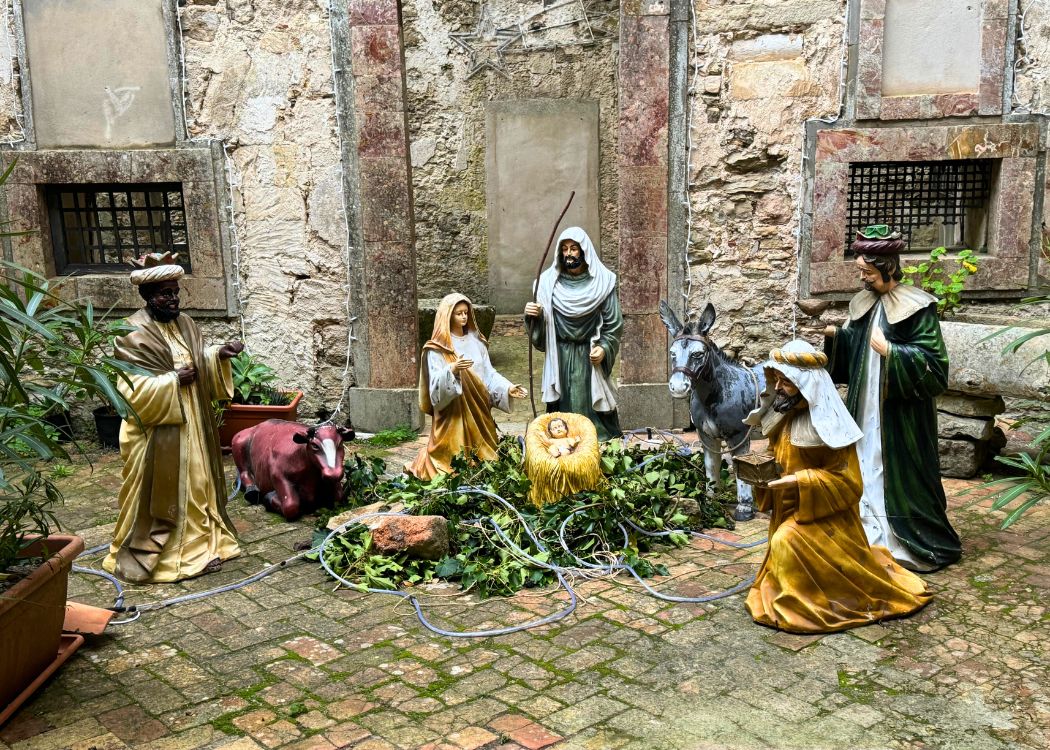
“Italy is one of the best places to celebrate the Christmas season.
With its wonderfully unique traditions and delicious foods, it may not be where I call home, but its traditions are deeply engrained in who I am.
Italians spend an entire month celebrating a variety of “feast days” leading up to Christmas.
From the Feast of the Immaculate Conception on December 8, until the Epiphany on January 6th, Italians are spending time with their families, enjoying meals together, and celebrating their faith.
Of course, a large part of Italian culture is food, and Christmas is no exception.
On Christmas Eve, our table was always filled with shrimp, crab, clams, calamari, and baccalà (salted cod which was important in celebrating the Feast of the Seven Fishes).
On Christmas Day, we would feast on pasta, lamb, and a variety of sweets and panettone.
Of course, our family would either head to Midnight mass on the 24th or go to church on Christmas Day.
If you are in Italy, Midnight Mass on Christmas Eve is popular, especially at the Vatican, where people from around the world come to celebrate.
And speaking of celebrations, one particular Christmas tradition that my Calabrese family did not really celebrate, but many of my Italian friends did, was La Befana.
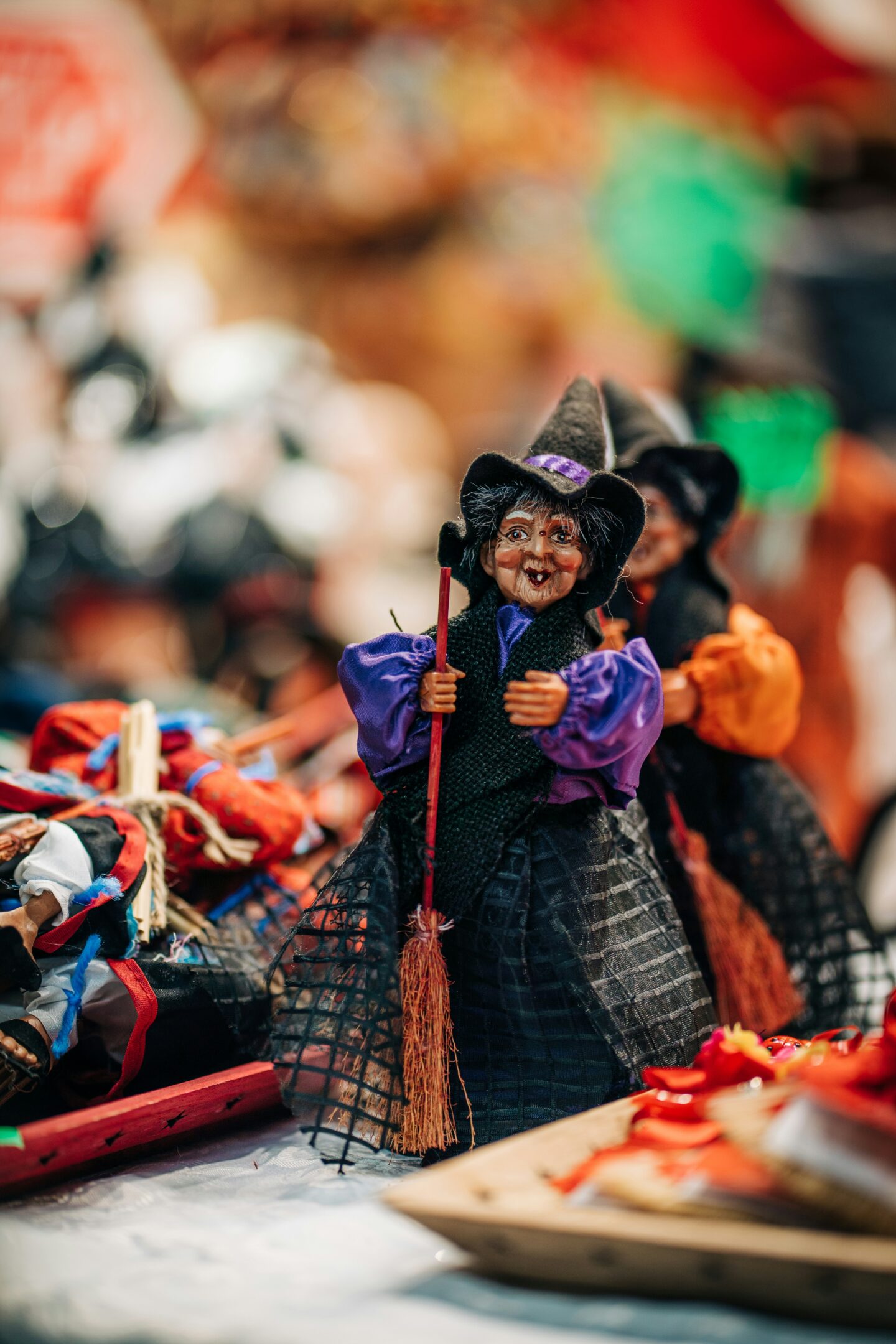
According to Italian legend, La Befana is a warm-hearted witch who, upon hearing of Jesus’ birth, set out to deliver gifts. However, she didn’t make it in time.
So each year on the eve of the Epiphany, she travels on her broomstick, bringing sweets to well-behaved children across Italy.
For the naughty ones, she leaves a “coal” candy as a gentle nudge toward better behaviour.
Kids leave out their shoes on Epiphany Eve, hoping for treats from La Befana. They also leave cakes or cookies for her, much like we leave cookies and milk for Santa.
Some regions in Italy even bake Focaccia Della Befana, which is a special cake with a coin baked in it. The finder of the coin is said to have good luck for the coming new year.
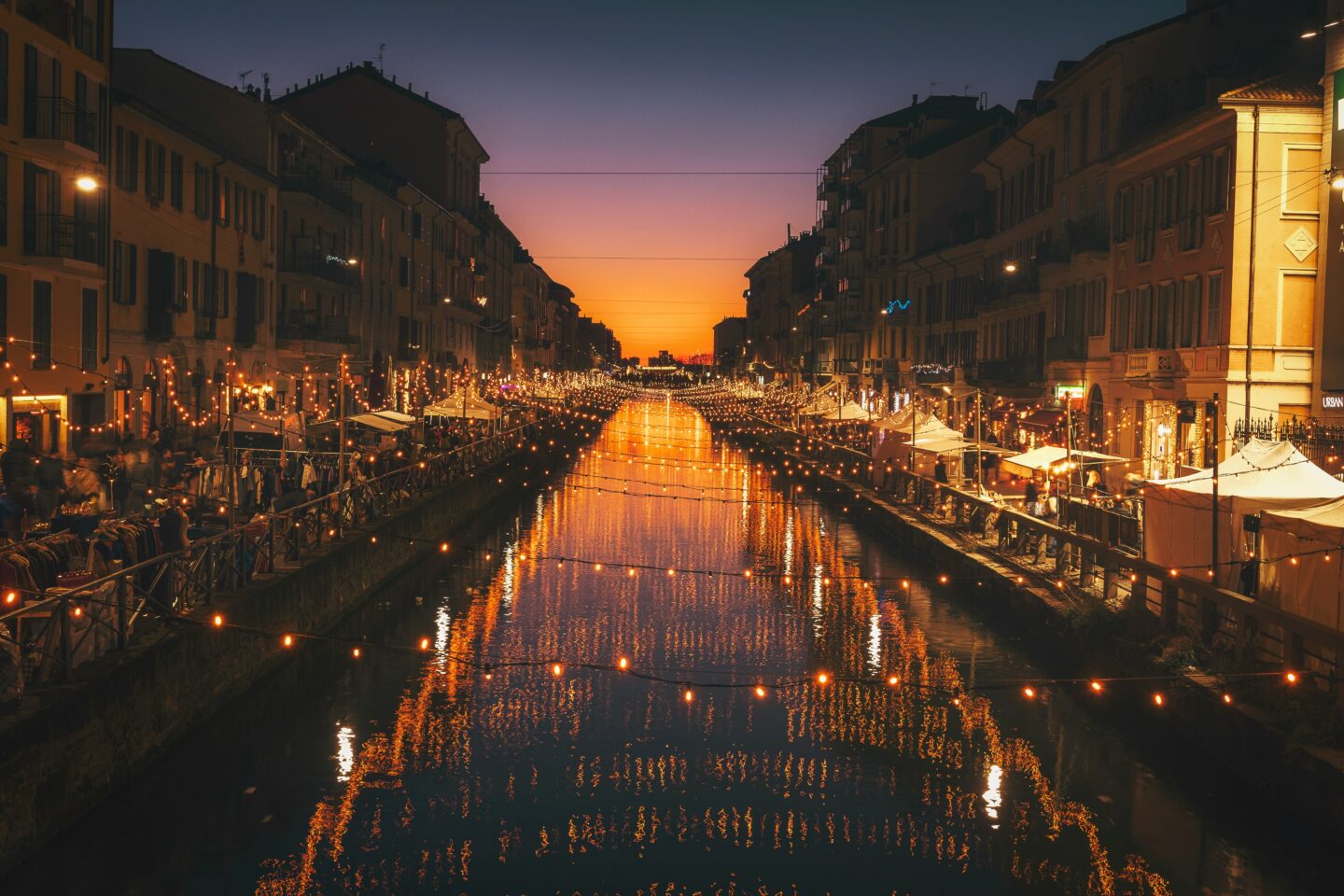
(Photo by Cristina Gottardi)
If you are visiting Italy during the Christmas season you will find plenty of beautiful decorations like Preseppi (Nativity Scenes), Christmas Markets (though not as grand as in Germany), festivals, and lovely light sculptures.
Just be prepared for most businesses to be closed from either December 23rd or 24th, until at least December 27th. This is common in larger cities but is especially true in smaller towns.
“My absolute favourite thing to do in Italy at Christmas is listen to the church bells ringing.
After Midnight Mass or early on Christmas morning, you will hear the bells ringing all over town. One of my all-time favourite sounds!”
– Marianne
Find More Things to Do In Italy
Christmas in Spain
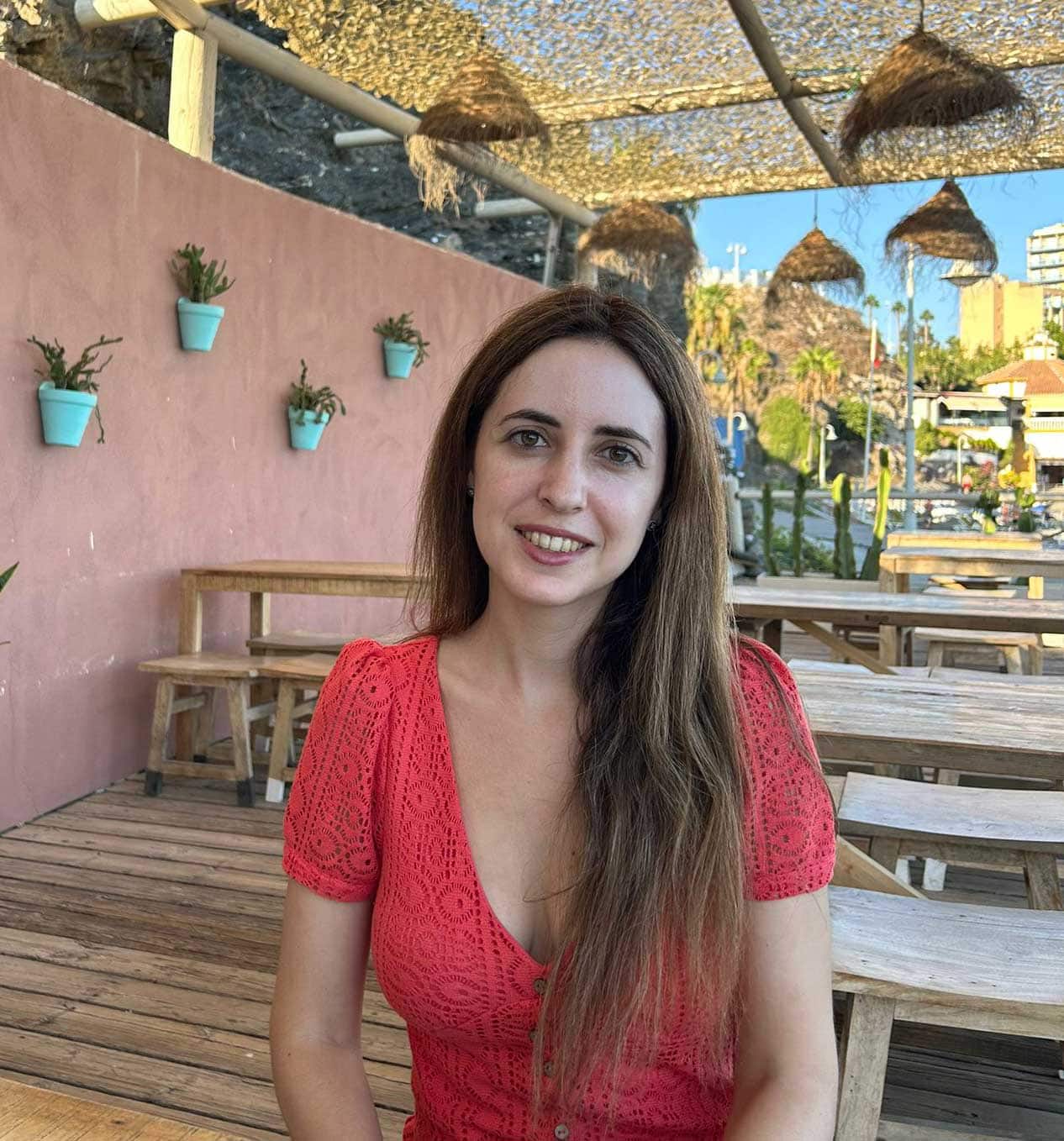
Shared by Cristina from My Little World of Travelling:
“My absolute favourite thing about Spain at Christmas is the family gatherings and atmosphere. Although I love Christmas, I prefer New Year’s Eve, when we eat the 12 grapes at midnight and the Three Kings parade on the 5th of January.”
You can find her Malaga Travel Tips on Facebook!
“Christmas time in Spain is beautiful. We have amazing cities and towns to celebrate the festive season.
You can enjoy the big cities like Madrid and Barcelona, the crispy cold weather of the north or the warm and sunny Christmas in Southern Spain.
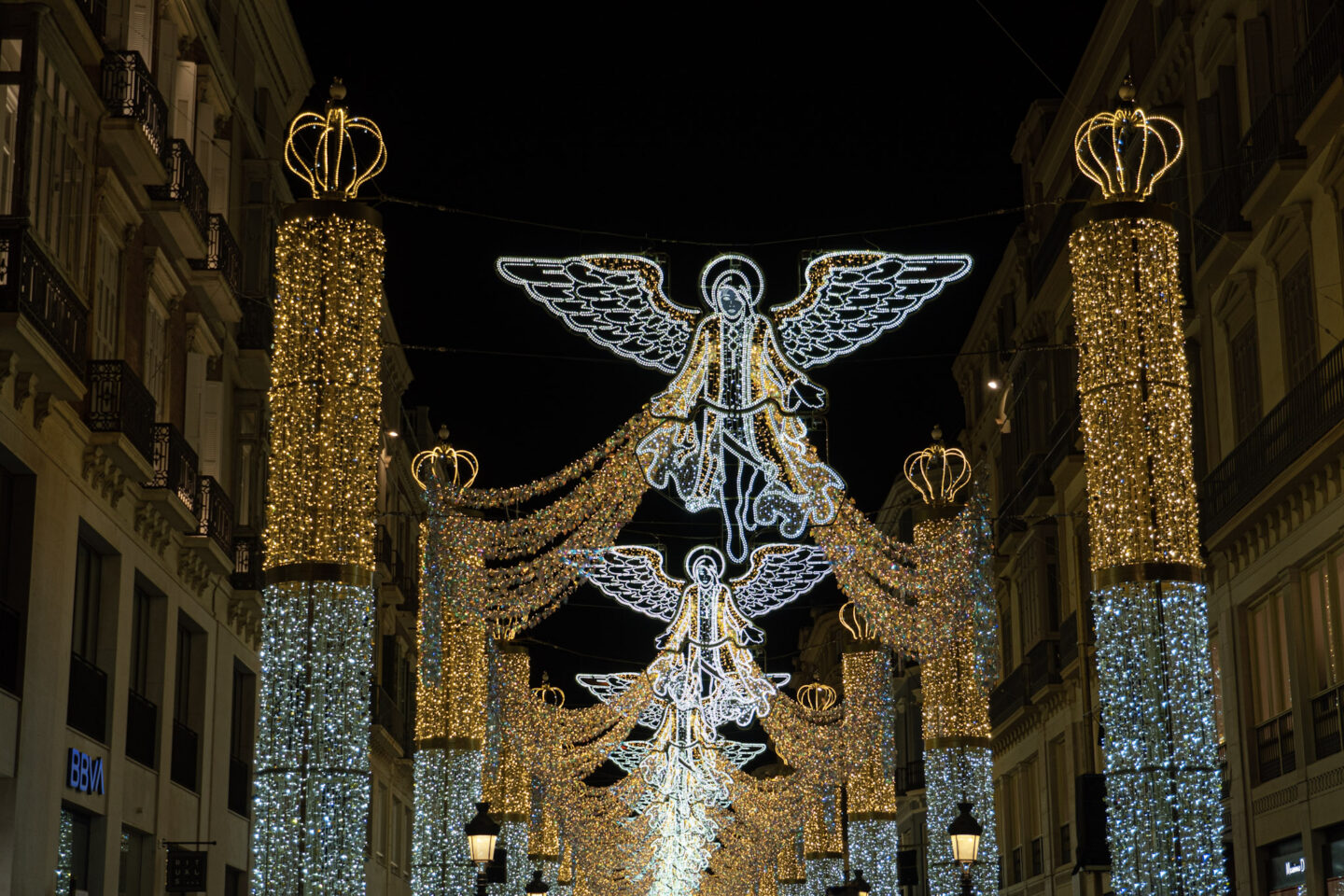
I am from Malaga, Southern Spain, and I think more travellers come to Malaga at Christmas than before, and one of the reasons for this is the Christmas Lights. Malaga has some of the best Christmas displays in Spain.
The main lights are on Larios Street, Malaga’s main shopping street, an emblematic place for all the events that take place in the city.
Besides seeing the light show and the video mapping in the Cathedral, I also recommend checking out the beautiful nativity scene in the town hall, which is also another traditional activity for us.
Similarly to Malaga, other cities also have light shows and markets worth exploring.
In terms of traditions, we celebrate Christmas Day, but we also celebrate Christmas Eve, and for some families, the latter is even bigger. I gather with my family, have a big meal in the evening, sing Christmas carols and play board games.
Food at Christmas usually consists of ham, cheese and other small bites, a main dish, which is fish or meat, and dessert and nougat. The latter is a staple in every Spanish Christmas table.
I recommend trying the different flavours, from the traditional soft almond nougat to the newest flavours like the lollipop one.
If you come to Spain during this time, you will find most cities busy with locals and tourists seeing the lights and visiting the city’s main attractions.
Most shops and restaurants open during the festive season, as people buy presents and spend quality time with family.
Regarding restaurants, I recommend booking a table in advance, if possible, as some don’t take reservations.
Christmas in England
Shared by Gill from Secret Sussex
“December in England is dark and cold, but Christmas time makes it magical, with twinkling lights illuminating towns and cities.
High streets are filled with Christmas markets, where you can enjoy hot festive drinks and carol singers or purchase artisan gifts.
Traditions include decorating the Christmas tree, visiting Santa’s Grotto with kids and spectacular Christmas parties.
Pantomimes are a strong tradition, which is a blend of slap-stick comedy with classic fairytales in theatres.
On Christmas Day, families gather to exchange gifts and share a traditional meal of roast turkey with all the trimmings.
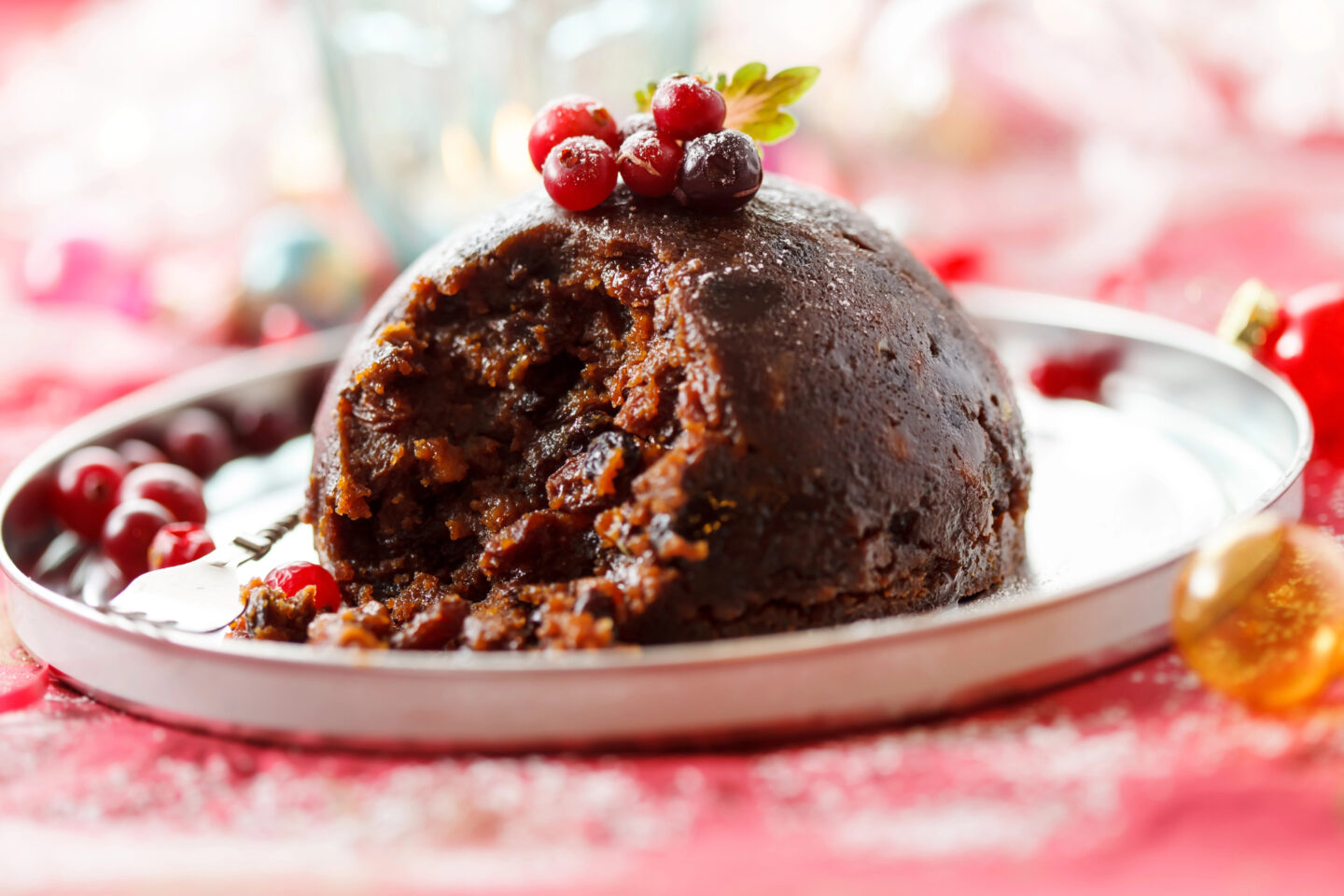
Christmas pudding, a rich dessert made of dried fruits, is set alight with brandy, adding to the celebratory spirit.
Joyful, cosy gatherings with loved ones uphold an atmosphere of togetherness and celebration, with mulled wine and mince pies a staple.
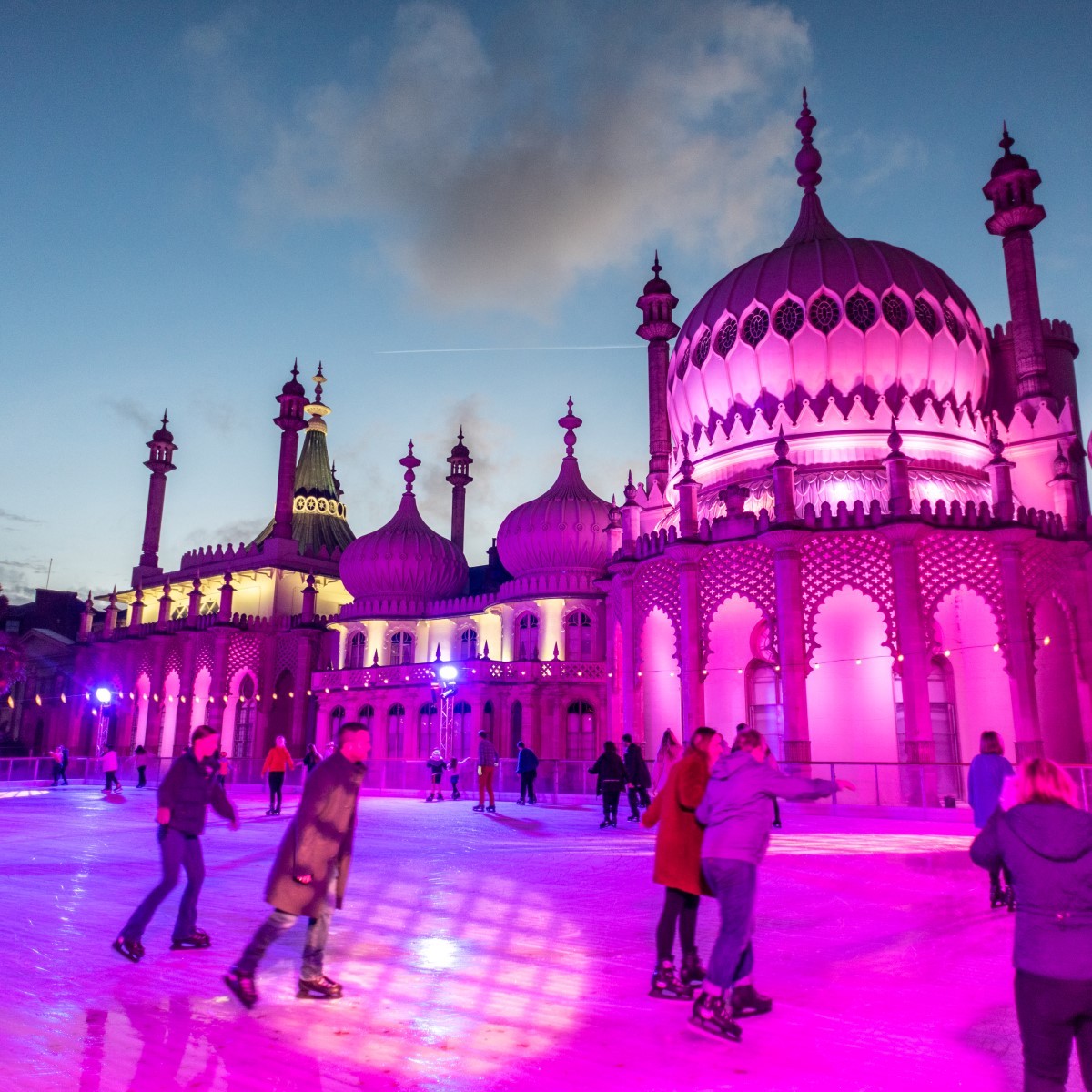
In Sussex, Brighton’s iconic Royal Pavilion is transformed into a winter wonderland, with festive decorations and ice skating.
Strolling along Brighton’s pier and beachfront, or pottering the charming cobbled Lanes adds to the coastal charm of the season, making it a memorable experience for locals and tourists alike.
“My absolute favourite thing about Christmas in England is the Christmas Day cold water sea swim, which many coastal towns enjoy.”
– Gill
Find More Things to Do In the UK
Christmas in Denmark
Shared by Agalya from Your Denmark Guide
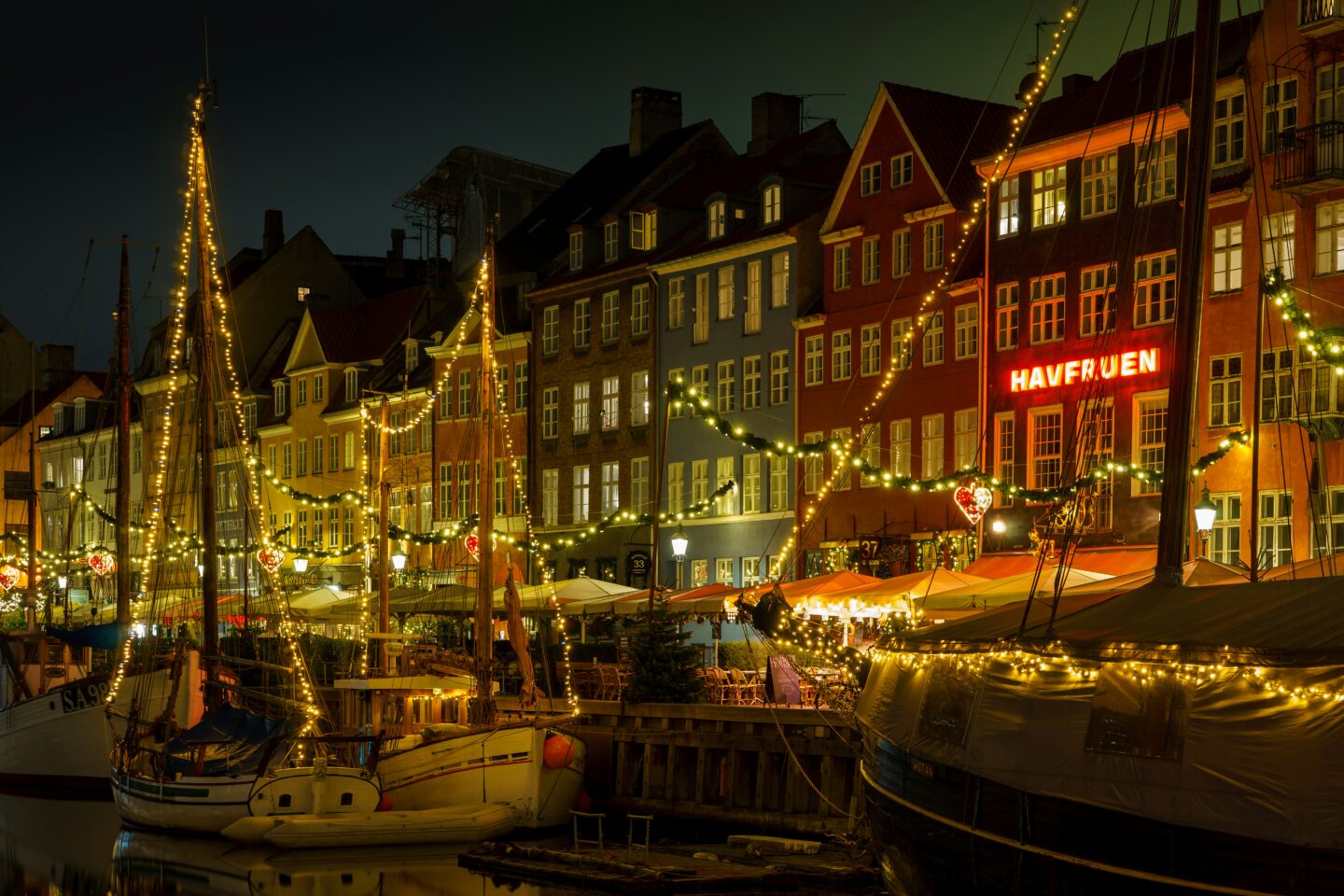
“Danish traditions are deeply rooted in their culture, followed even today, and passed down through generations.
Danish Christmas traditions, in particular, are a big part of the Danish holiday season.
Christmas in Denmark kicks off early with “J Day”, a beer festival on the first Friday of November, followed by the Santa Lucia parade in the Copenhagen canals, the Christmas procession on Amagerbrogade, and so on.
The holiday season here is longer, filled with several events and festivities.
Unlike in many other European countries, Denmark’s main Christmas celebration takes place on Christmas Eve, not on Christmas Day.
Last year, I was lucky to experience Christmas Eve with a Danish family. We spent the evening chatting, watching traditional Disney TV specials (something they watch every year), dancing around the Christmas tree, exchanging presents, and enjoying a traditional Danish dinner, Julefrokost.
An interesting part of the meal was the Risalamande dessert — whoever finds the whole almond wins an extra gift!
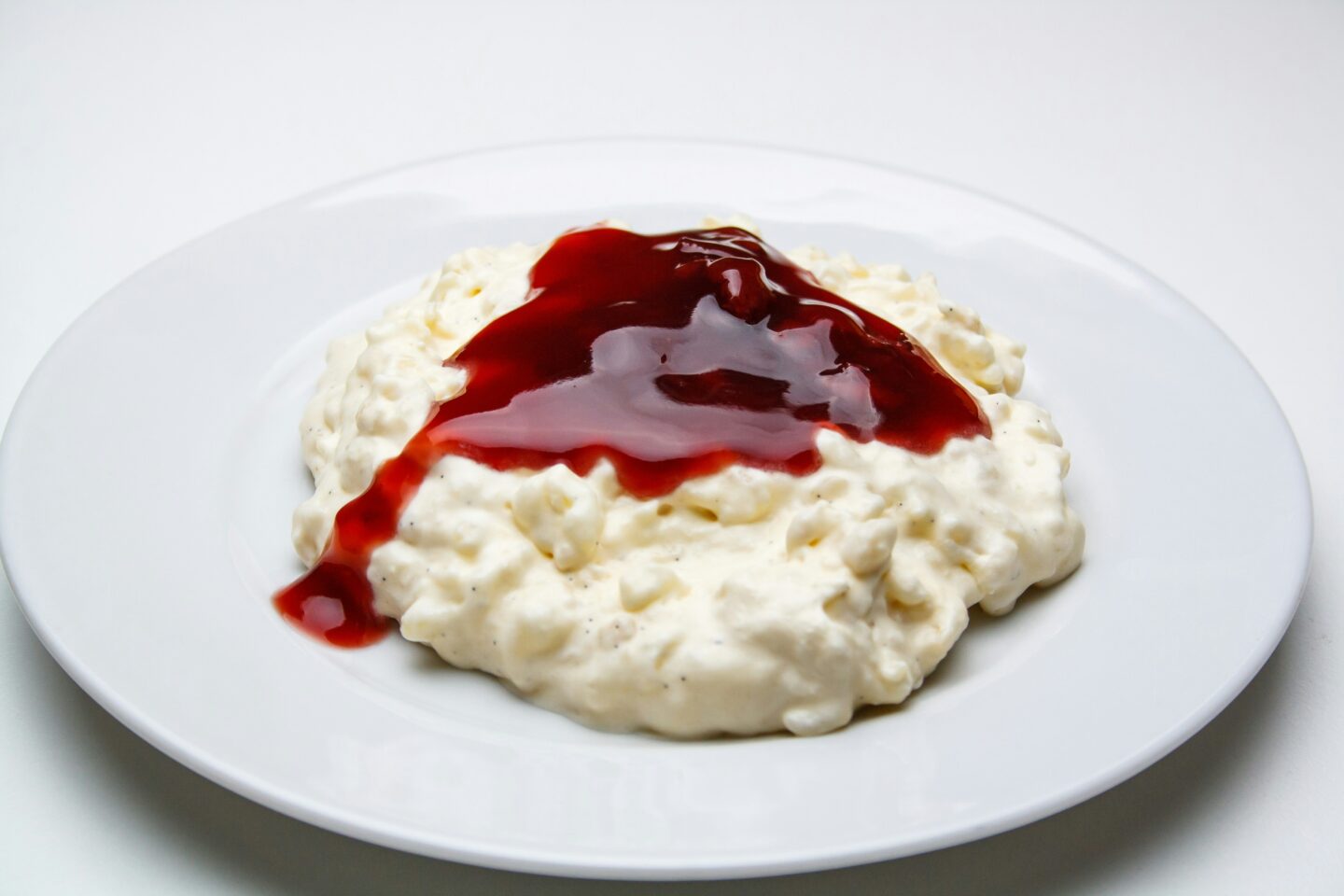
Every year I look forward to eating my favourite seasonal treats like Gløgg (mulled wine) and Æbleskiver, Danish pancake balls topped with sugar, and taste best when dipped in jam.
The 24th, 25th, and 26th of December are public holidays, so attractions and restaurants close down to let families celebrate together.
I recommend visiting Denmark in December when the Christmas markets are open, and the streets are decorated with festive lights.”
“My favourite thing about Christmas in Denmark is “the hygge”, emphasising the cosiness and togetherness they bring with the holiday — it’s all about celebrating with loved ones. Glædelig Jul!”
– Agalya
Celebrating Rizdvo in Ukraine
Shared by Inessa from Through a Travel Lens
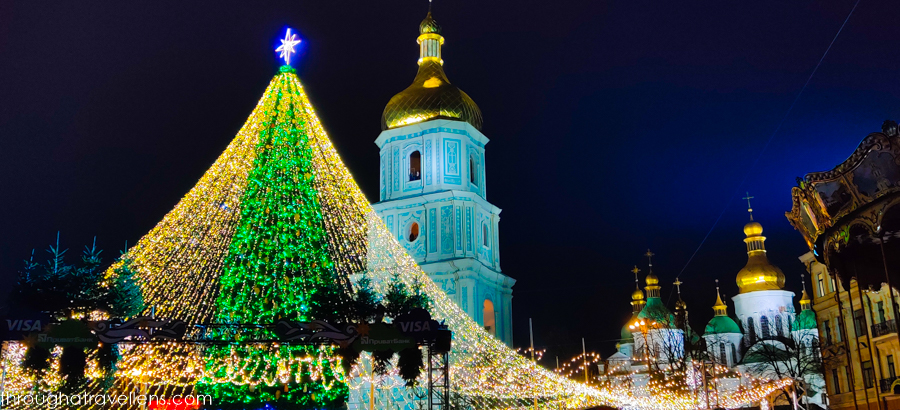
“Christmas in Ukrainian is called Rizdvo, and it is a very special time. Celebrated on the 25th of December, it is a holiday deeply rooted in tradition.
Cities and villages across Ukraine start getting ready for Christmas at the beginning of December. Traditional decorations include plenty of lights and festive fairs.
There is also a friendly competition between major cities as to which one has the most impressive Christmas tree. The two leaders tend to be the capital, Kyiv, and the old and beautiful city of Lviv.
My favourite part of the celebration is when the entire family gathers for Christmas dinner — we call it the Holy Meal.
Food is at the centre of Ukrainian culture. It is how we show our love and appreciation, and connect to our ancestors by following old recipes.
I absolutely love it when, at the beginning of the Holy Meal, kutia — the traditional Ukrainian Christmas dish — is passed along the table:
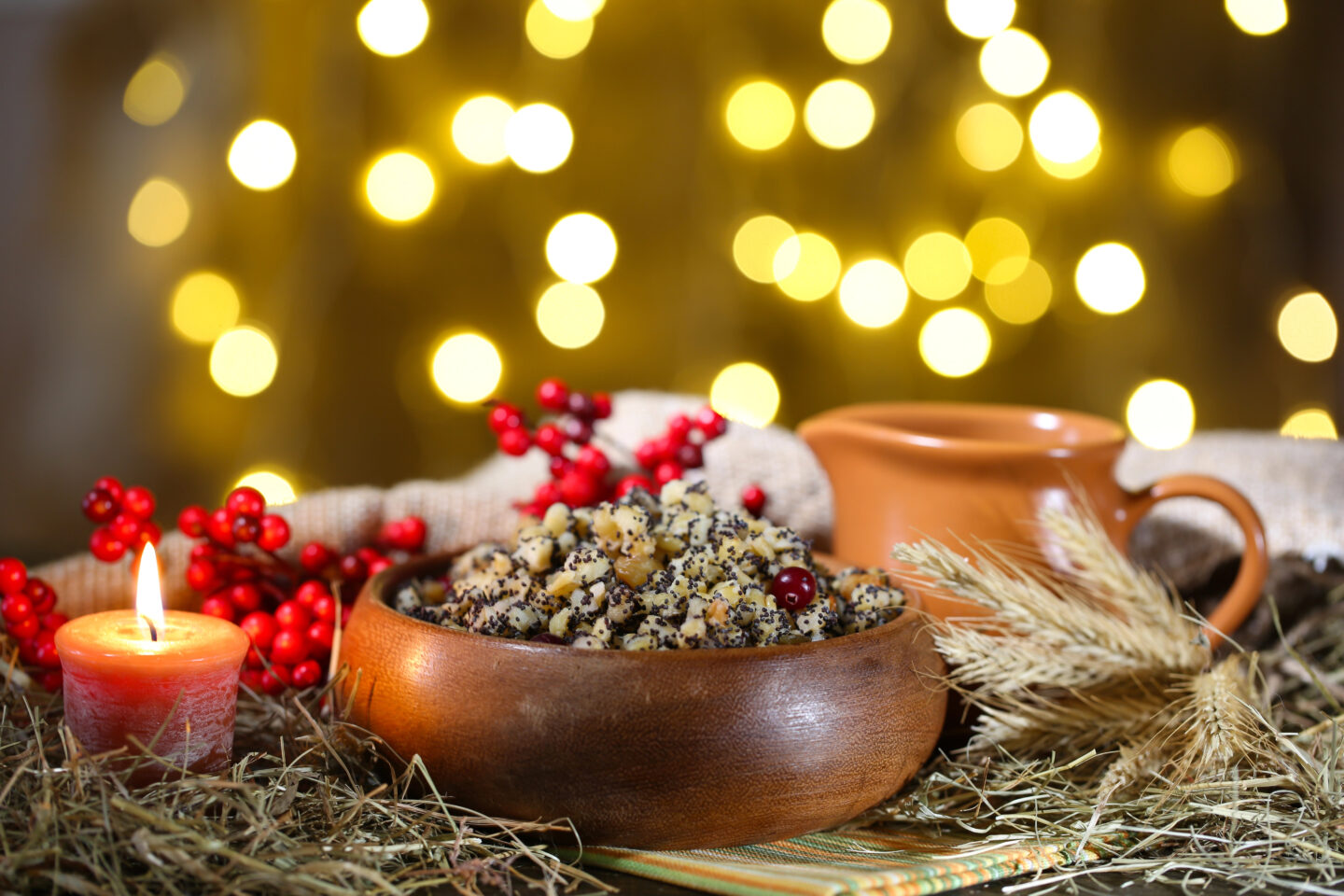
Made from grains, poppy seeds, and nuts, kutia is rooted in pagan traditions. It is how we celebrate life and, in a symbolic way, share food with our ancestors.
After the meal, it is common to go carolling. One of the most popular carols is the song Shchedryk. Millions of people around the world know it, too, but under the name Carol of the Bells.
The music for this world-renowned carol was written by the Ukrainian composer Mykola Leontovych back in 1914.
Funnily enough, the original lyrics refer to the spring season — in pre-Christian Ukraine, our ancestors celebrated New Year in early April.”
Christmas in Hungary

Shared by Hira from Musafir In Transit:
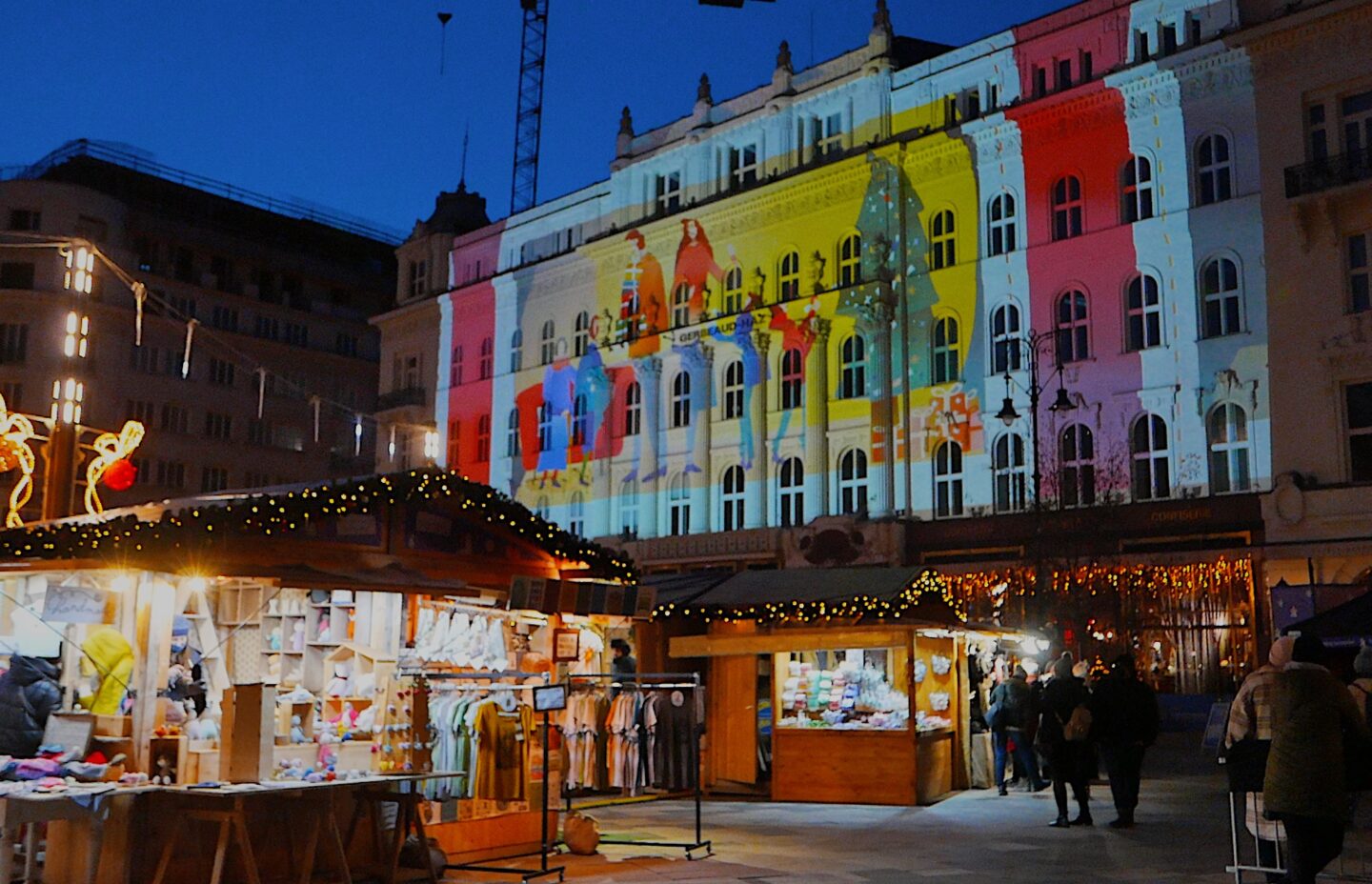
“My absolute favourite thing to do in Budapest at Christmas is wandering through the festive markets at Vörösmarty Square, mulled wine in hand, surrounded by the glow and warmth of the season.”
You can also find her on Instagram
“Coming from Pakistan, where Christmas isn’t widely celebrated, my years in Budapest brought me into the heart of this magical season.
Celebrating with Hungarian friends and colleagues, I was immersed in traditions that were both heartwarming and rich with meaning.
Budapest truly transforms during Advent, with families gathering each Sunday to light a candle on wreaths symbolizing faith, hope, joy, and love — a beautiful tradition I grew to cherish.
Christmas Eve is the true highlight. Families secretly decorate the tree with fondant-wrapped szaloncukor, keeping it hidden from children until the big reveal, when “angels” are said to have delivered it.
Following this enchanting moment, tables fill with traditional dishes like spicy halászlé (fishermen’s soup) and töltött káposzta (stuffed cabbage), each bite bringing a true taste of Hungary.
Christmas Traditions with an Eastern Twist
Let’s now head east, where Christmas traditions take on a whole new feel.
Christmas in Georgia
Shared by Baia from Red Fedora Diary
You can follow her on Instagram
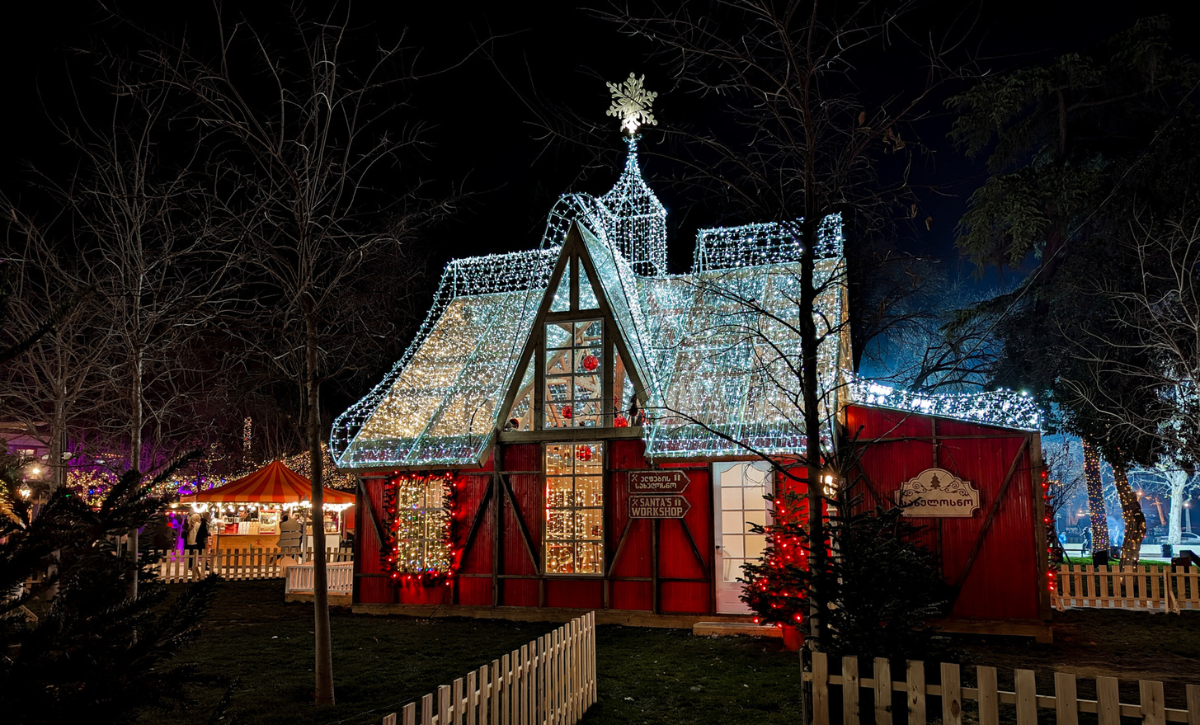
Georgia is an Orthodox Christian country that observes the Julian Calendar.
This means that every significant event and religious celebration is marked 13 days later than in the countries adhering to the Gregorian Calendar.
Consequently, Christmas in Georgia falls on January 7. Regardless, the festivities start in mid-December, with decorations and Christmas Markets.
December 31 is the most festive day for New Year and Christmas celebrations, with concerts and events held in various parts of the country. On this day, we have a late dinner and particular meals explicitly prepared for New Year’s Eve.
We typically serve turkey/chicken stew in walnut sauce, a few vegetables in walnut paste appetisers, and a walnut-honey snack called Gozinaki, to name a few.
Within all the traditions we do in Georgia, I especially love January 2, the day of ‘fate’ or Bedoba in Georgian.
We are huge believers in fate, so on this day, we do things that make us happy and spend it the way we’d like the rest of the new year to look.
On Christmas Day marked on January 7, a religious procession called Alilo parades through Tbilisi’s main streets.
Participants wear specific costumes, proudly holding Georgian flags, crucifixes, and religious icons, and sing Christmas songs and carols.
The atmosphere during the season is mainly laid-back, with fewer crowds than popular European destinations.
Moreover, shops, restaurants, and cafes stay open throughout the festivities, except January 1-2, when it’s a public holiday.
If you decide to visit Georgia, don’t forget to try Georgian wine — the country is home to some of the most underrated wine regions in the world!
Christmas in the Sun
Forget snow and sweaters — in places like New Zealand and Indonesia, Christmas is all about sunshine, beachside gatherings, and feasts bursting with tropical flavours.
It sure is a different take on the holiday, but the festive cheer is every bit as real. Let’s explore how these sunny spots make Christmas feel just as magical, even without the snow!
Christmas in New Zealand
Shared by Ayushi from Laptops & Landscapes

“Having grown up in New Zealand, our Christmas season is all about summer vibes, and time spent outdoors with the family.
No Christmas is complete without a summer barbecue, typically over lunchtime.
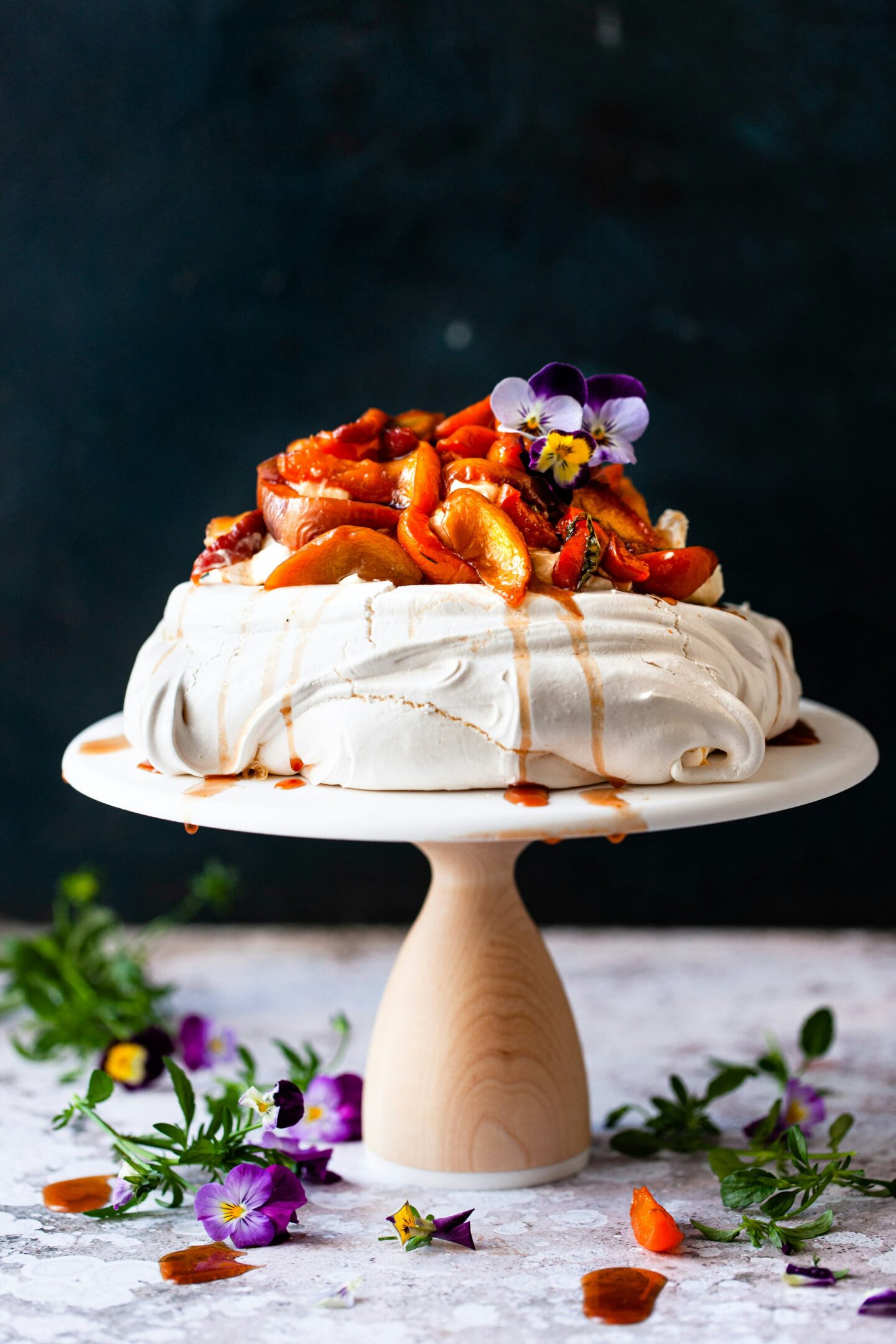
With New Zealand being one of the best wine regions in the world, this is often accompanied by some local wine like a crisp Sauvignon Blanc or Pinot Gris and finished with a traditional Pavlova dessert, topped with fresh summer fruits like strawberries and kiwifruit.
Leading up to Christmas, there are several events like the annual Santa’s Parade down Queen Street in Auckland, as well as ‘Christmas in the Park’, a live carol and music show for the family to ring in the festive season.
If you’re looking for an alternative Christmas experience, then New Zealand is the perfect destination.
With long summer days over December and January, this is the perfect time of year to visit if you want to experience a true ‘Kiwi’ Christmas and combine it with some travel around the country.”
“My absolute favourite thing about New Zealand at Christmas time is the beach time!
A lot of families will head to the beach over Christmas, with beaches like Mount Maunganui, Piha, and the Coromandel being extremely popular this time of year.”
– Ayushi
Christmas in Indonesia
Shared by Silvia from The Good Observer
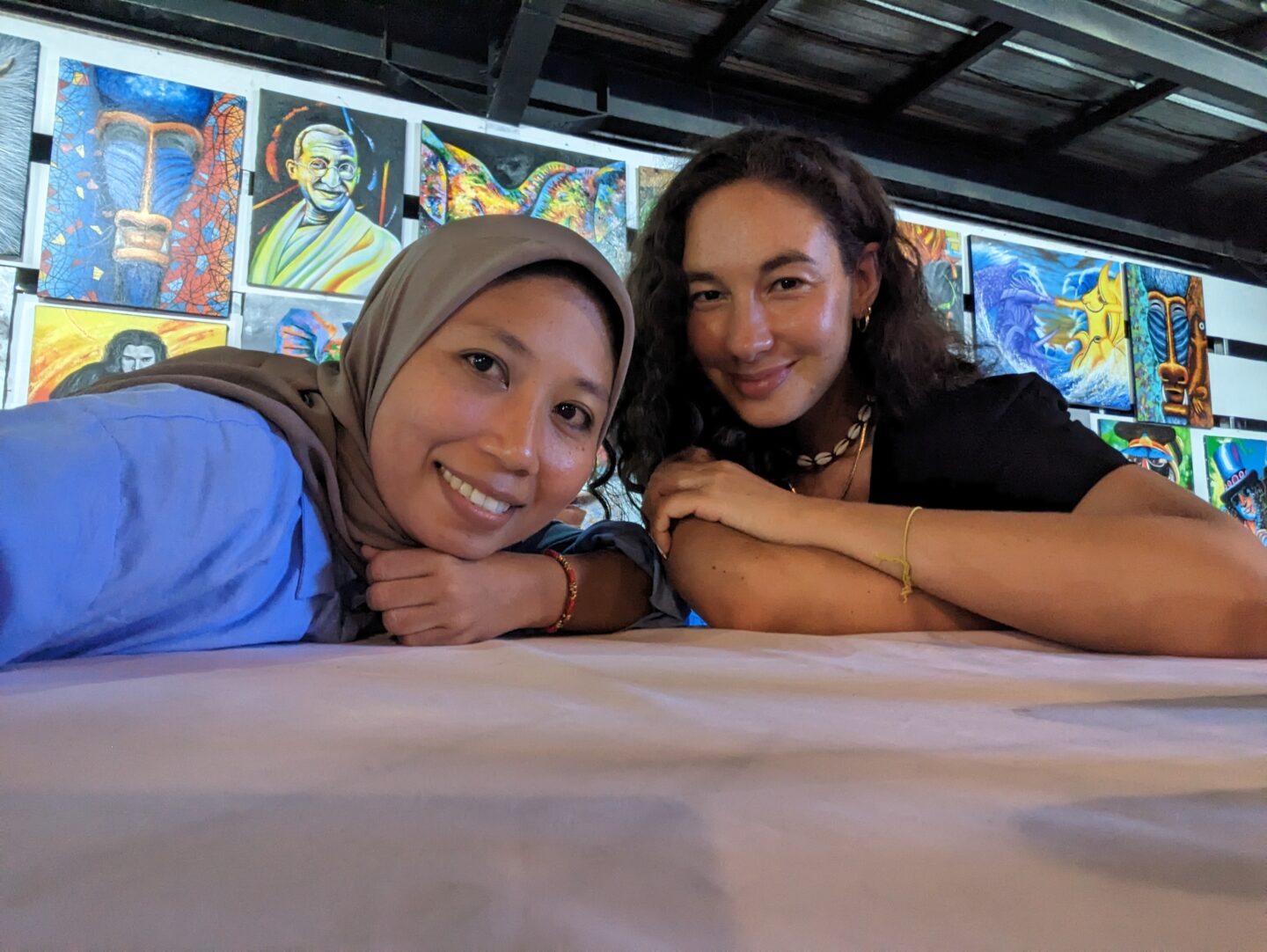
“My absolute favourite thing about Indonesia at Christmas is that there is no Christmas but there is a lot of love!”
– Silvia
“Lombok, unlike its neighbour Bali, is mainly a Muslim island. Although there is no Christmas, locals are the warmest people and are open to different cultures.
The expat community in Indonesia is strong too, so you can join Christmas events organised by different communities all over the country.
However, my favourite way to spend Christmas in Indonesia is with my local friend Jia.
On Christmas day we would go for breakfast together. She would say “Selamat Natal” which means Merry Christmas and order a spicy Nasi Goreng (fried rice) while I get banana pancakes.
On this day Jia and I would do all our favourite things, which include riding a bike in the countryside and watching the sunset.
For dinner, we would get our favourite meal — a delicious Bakso. This is a traditional Indonesian soup with meatballs and noodles.
You normally get this plate from “warungs” which are local restaurants or stands.
Christmas in Bali is very similar as well, you get to join events with expats or create new memories with local people ♡“
Christmas in Australia
Shared by Sharyn from Discover Australia Now
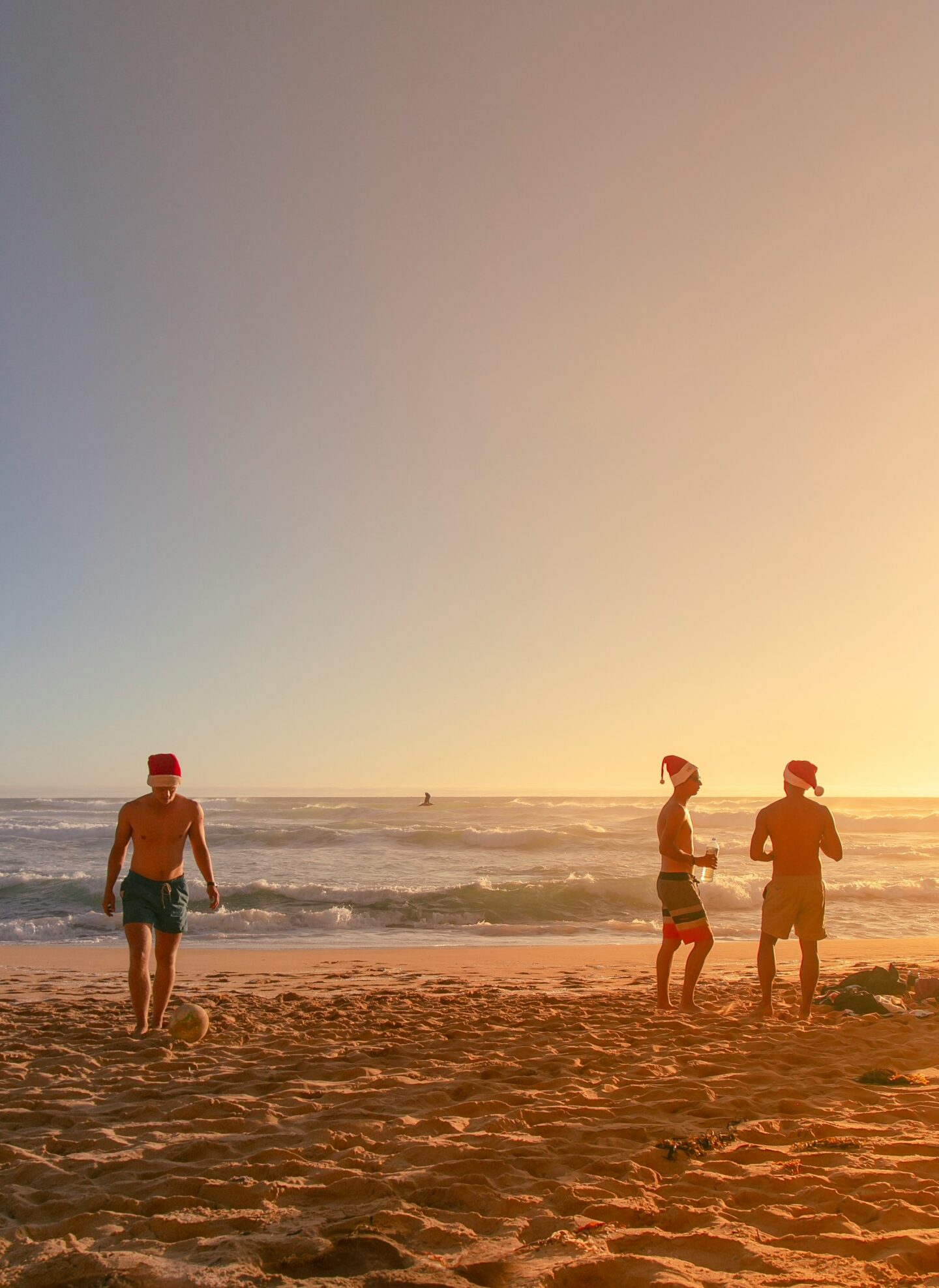
“Christmas in Australia is usually hot as it falls during summer.
Even though there are many Christmas decorations reflecting a winter theme, you will always find a Santa Claus in shorts and a t-shirt.
As Australia is a very multicultural country Christmas is often spent in different ways with some more religious than others.
With Australia being part of the Commonwealth, Christmas meals are often influenced by foods from the UK with a twist of International flavours.
The excitement of Christmas begins on December 1st when most people put up their Christmas trees. Decorations are put up in the shops and people scurry around buying presents and food for the big day.
Christmas Eve is very exciting, particularly for kids who leave carrots out for the reindeer and a piece of Christmas Cake and a Beer for Santa.
Some people with extended families with start celebrations on Christmas Eve so they will be able to move for meals with different families and friends.
Christmas morning is full of excitement with the exchanging of gifts followed by a special Christmas breakfast of whatever you like!
As summery gifts like pool toys and beach towels are often given, these come in handy for swims on Christmas morning.
Christmas lunch is probably the biggest meal with families gathering for a roast meal with baked meats served with vegetables and/or salads.
Or in my case, I usually do BBQ meat with salads followed by one of Australia’s favourite desserts — the Pavlova — a meringue-type cake covered in whipped cream with fruit on top!
A snooze on the couch usually follows before dinner where family gather again and usually enjoys leftover meats and salad from lunch, and yes, more Pavlova if any is left!
The night ends watching Christmas shows on TV while enjoying your Christmas present.”
“My absolute favourite thing to do in Australia at Christmas is to swim in the pool, be with family and enjoy a big piece of Pavlova!”
– Sharyn
Final Thoughts: Christmas Traditions In Different Countries
As we wrap up this journey around the world, from snowy (or sunny!) escapes to citywide festivities, I hope you’re feeling as inspired as I am by the beautiful variety of Christmas traditions.
So, tell me — which of these places would you consider for your next Christmas holiday? Let me know in the comments!
And if these stories brought a smile to your face, why not share them with your loved ones? Who knows? You might just inspire them to join you in exploring a new Christmas tradition or two!
SHARE & SAVE FOR LATER
Looking for More Christmas Inspiration?
- Embrace the festive spirit with the best things to do in London at Christmastime!
- Don’t forget to check out these holiday movies set in the city!
- Go for a walk in Kew Gardens which hosts a magical light trail!
- Enjoy the magic of Christmas in Vienna!