Last Updated on April 25, 2026 by Goya
A Journey Through Oldest Wineries in Napa Valley
As the crown jewel of American winemaking, Napa Valley is a region steeped in rich history and tradition. It’s a place where the old and the new coexist harmoniously, creating a beautiful blend of the past, present, and future.
New wineries are continually sprouting up in this fertile landscape, each adding its unique touch to the valley’s vibrant wine scene. Yet, amidst this constant evolution, there exists a distinguished group of wineries that have stood steadfast against the sands of time.
These establishments — including some centenaries — continue to operate today, serving as living testaments to the valley’s enduring winemaking legacy.

Story of Winemaking in Napa Valley
The tale of Napa Valley’s winemaking journey begins in the 18th century when the Spanish first introduced grape farming in California. It would be another hundred years before these grapes found their home in Napa Valley, marking the start of what we now know as modern winemaking practices. By the time the 19th century was winding down, Napa Valley had blossomed into a thriving wine haven, boasting close to 150 wineries.
However, the industry was soon to face a devastating one-two punch that would signal the downfall of many of these wineries. In 1910, the dreaded phylloxera virus swept through the valley, annihilating over 90% of the vineyards. This disaster was followed by the introduction of Prohibition in the 1920s, which threatened to erase Napa Valley’s wine industry entirely.
Miraculously, a select few wineries managed to weather these stormy events and emerged victorious on the other side. Others were lovingly restored to their previous splendour by dedicated winemakers who recognized the inherent potential of the region. These pioneers laid the groundwork for the revitalized Napa Valley we know today, which stands as one of the world’s leading wine regions with 400+ wineries.
Oldest Napa Wineries
Ready for a venture into the heart of Napa Valley as we explore its oldest wineries? Excellent, let’s go!
We will start our journey with the ‘relatively‘ younger veterans, those with 80-odd years of winemaking under their belts, and slowly work our way up to the centenarians.
So, grab a glass of your favourite pour, sit back, and join me as we toast to the rich history and delicious offerings of Napa Valley’s oldest wineries.

#12: Hendry Winery
Established: 1939 (80+ years old)
Location: 3104 Redwood Rd, Napa, CA 94558, United States
While Hendry as we know it today was established in 1939, its viticultural history traces back much further. The land that now comprises the Hendry Ranch was home to some of the earliest vineyards in Napa, planted by pioneering winemakers Frederick and John Sigrist in 1859. By 1880, under the ownership of George Barth and John Buhman, the ranch had grown into one of the most extensive vineyards in Napa, with all available land dedicated to grapevines.
Sadly, the late 1800s brought about a severe downturn for Napa’s burgeoning wine industry. A devastating outbreak of phylloxera wreaked havoc on the vineyards, significantly damaging the once-flourishing grapevines at the ranch.
Fast forward to 1939, when Margaret and George Whiting Hendry purchased the former Buhman Ranch and moved from their home in Point Richmond to Napa. Along with their sons, the Hendrys brought a new chapter to the winery. Their son, George Hendry, who moved to Napa at the tender age of two, eventually took over the family business.
The Hendry family has now been farming this land for more than eighty years, generating exceptional wines that highlight the unique terroir of their estate. Their offerings are diverse, from their distinctive Albariño (a Spanish grape variety that is quite rare in Napa Valley, with only a handful of other producers in the region growing this particular type) to their acclaimed Zinfandel and Cabernet Sauvignon.
All in all, Hendry Winery is not just one of Napa’s oldest wineries; it’s a testament to the enduring spirit of winemaking in the region.
#11: Beaulieu Vineyards
Established: 1900 (120+ years old)
Location: 1960 St Helena Hwy, Rutherford, CA 94573, United States
Established in 1900 by Georges de Latour and his wife Fernande, Beaulieu Vineyard has a rich history as one of Napa Valley’s longest continuously operating wineries.
It all started with the couple buying a piece of land in Rutherford, with the aim of producing wines that could rival those of their native France. They named the vineyard “Beaulieu,” which translates to “beautiful place” — a fitting depiction of the gorgeous Napa Valley landscape.
During Prohibition, Beaulieu Vineyard managed to remain operational by producing altar wine for the Church. Georges de Latour made a significant contribution to the California wine industry by importing pest-resistant vines and offering European vitis vinifera varieties to his colleagues.
In 1938, he hired André Tchelistcheff, a Russian-born enologist, who played a pivotal role in developing Beaulieu Vineyard’s flagship wine, Georges de Latour Private Reserve Cabernet Sauvignon — Napa Valley’s inaugural “cult” Cabernet.
Over the years, Beaulieu Vineyard’s wines have graced the tables of dinners and receptions for influential figures like General Dwight D. Eisenhower, Winston S. Churchill, and Queen Elizabeth II.
Visitors to Beaulieu Vineyard can expect not just a tasting of exceptional wines, but also an immersion into the rich history and story of this remarkable winery. With over a century of winemaking under its belt, Beaulieu Vineyard continues to set the standard for quality and innovation in Napa Valley, truly living up to its name as a “beautiful place”.
#10: Stags’ Leap Winery
Established: 1893 (130+ years old)
Location: 6150 Silverado Trail, Napa, CA 94558, United States
The story of Stags’ Leap begins in 1872 when the Grigsby family first planted grapes on the land. Later, Horace Blanchard Chase bought the estate in 1888.
Chase and his family were renowned for their extravagant hospitality and held notable gatherings with San Francisco’s high society during the cooler months. Notably, they constructed a 150-foot wine cave, marking it as the first on the east side of Napa Valley. However, after a series of failed investments, Chase lost his fortune and subsequently the property.
In 1913, Clarence and Frances Grange purchased the property and transformed it into a luxurious destination resort named Stags’ Leap Manor. The couple lived there year-round and preserved the vineyards on the property. After their demise, the manor house began to deteriorate as it passed through several owners.
It wasn’t until 1970 when Carl Doumani and his wife Joanne bought a part of the property and undertook a nine-year restoration project. They restored the Manor House, Stone Winery, Cottage, and grounds, and reinitiated winemaking under the Stags’ Leap Winery label.
In 1996, Beringer, now known as Treasury Wine Estates, bought the property and continued the restoration and expansion of the winery.
Today, Stags’ Leap Winery is celebrated for its captivating and high-quality wines, offering visitors an intimate tour and tasting experience in the historic Manor House. Guests also have the opportunity to partake in a private seated tasting on the porch of the historic Manor House, savouring a selection of appellated Estate wines, all by reservation.

DID YOU KNOW?
Stags’ Leap Winery and Stag’s Leap Wine Cellars are two distinct wineries in Napa Valley, California, often confused due to their similar names. The difference lies in the apostrophe’s position: Stags’ Leap (multiple stags) and Stag’s Leap (single stag). This minor distinction led to a significant legal battle in the 1980s, known as “the war of the apostrophe” over the rights to the name “Stags Leap.” The dispute was resolved by allowing both wineries to use the name but with different punctuation. So, when purchasing or tasting wines from the Stags Leap District, be sure to note where the apostrophe is placed!
#9: Nichelini Family Winery
Established: 1890 (130+ years old)
Location: 2950 Sage Canyon Rd, St Helena, CA 94574, United States
The seeds of Nichelini Family Winery, a trailblazer in Napa Valley’s modern wine industry, were first sown in 1884 by Anton Nichelini, the first Swiss settler in Napa County’s Chiles Valley. He built a homestead cabin, planted vines and olive trees, and constructed a stone winery featuring a Roman wine press.
The winery was bonded in 1890, the same year Anton married Caterina, another Italian-Swiss immigrant. By 1895, a seven-bedroom house was built above the winery to accommodate their growing family. The winery, the restored homestead cabin, the original Roman wine press and the house are still standing today and have remained in the Nichelini family for over 130 years — making it the oldest continuously family-owned and operated winery in Napa County.
Nichelini produces a variety of wines, including Cabernet Sauvignon, Zinfandel, Sauvignon Vert (Muscadelle), and Petite Sirah, all of which showcase a unique finesse and individuality that speaks volumes about their meticulous craftsmanship.
At Nichelini Winery, visitors not only taste remarkable wines but also experience the deep-rooted family heritage that permeates the vineyard. The winery’s century-old tradition, embodied in its motto “Generation to Generation”, is palpable as guests explore the grounds and delve into its rich history.
#8: Trefethen Family Vineyards
Established: 1886 (130+ years old)
Location: 1160 Oak Knoll Ave, Napa, CA 94558, United States
Trefethen Family Vineyards, originally founded as the Eshcol Winery in 1886, stands as one of Napa Valley’s historic winemaking establishments. This unique landmark, the only surviving three-level wooden gravity-flow winery from the 19th century, was designed by a Scottish sea captain named Hamden McIntyre.
Eschol played a pivotal role in establishing Napa’s reputation for premium wines, even earning accolades at the 1889 Paris Exhibition. However, the advent of Prohibition led to a shift towards grape farming and the winery struggled to regain its former glory in the post-Prohibition era due to evolving consumer preferences. As a result, by 1940, the vineyards and winery had fallen into disuse.
The vineyard saw a revival when Eugene Trefethen and his wife Katie purchased the property in 1968, following their retirement. They embarked on a mission to restore the historic winery and replant the vineyards. Their efforts were recognized in 1988 when the Department of the Interior placed the winery on the ‘National Register of Historic Places’ as the only 19th-century, wooden, gravity-flow winery still standing in Napa County.
The winery also gained recognition for its distinguished estate-grown wines, which beautifully express the terroir. Notable vintages include the Cabernet Sauvignon and Chardonnay, both of which receiving critical acclaim.
Trefethen Family Vineyards is more than just a winery; it’s a living piece of Napa Valley’s wine history. The tastings here, often accompanied by generous service, wine education, and stunning vistas, offer visitors an immersive wine experience.
#7: Freemark Abbey Winery
Established: 1886 (130+ years old)
Location: N, 3022 St Helena Hwy, St Helena, CA 94574, United States
Established in 1886 as Tychson Cellars (and later Lombarda Cellars), Freemark Abbey Winery is a pioneer winery in Napa Valley, California, with a rich heritage and reputation for exceptional craftsmanship.
Initially established by Josephine Marlin Tychson as one of the first women to operate a winery in California, the winery was also among the first to produce Cabernet in the region. It holds the distinction of being the 16th bonded winery in Napa Valley and is home to a historic 1899 hand-built stone winery.
After its closure over Prohibition, the winery was purchased in 1939 by three Southern California businessmen — Albert “Abbey” Ahern, Charles Freeman, and Markquand Foster, who renamed it Freemark Abbey, a name derived from portions of each partner’s name.
Today, it is best known for crafting classically structured Cabernet Sauvignon from pedigreed sites, particularly the iconic Bosché and Sycamore vineyards. These vineyards are renowned for their unique terroir, which imparts distinct flavours and complexity to the wines.
Visitors to Freemark Abbey can experience a variety of tastings, including a comparative tasting featuring wines from different decades or appellations. This provides an opportunity to explore the nuances of each vintage and learn more about the winemaking process.
#6: Far Niente Winery
Established: 1885 (130+ years old)
Location: 1350 Acacia Dr, Oakville, CA 94562, United States
Founded in 1885 by John Benson, Far Niente Winery is a historic vineyard nestled within the renowned Oakville AVA appellation (one of Napa Valley’s 16 amazing nested AVAs). The name of the winery is derived from the Italian phrase “dolce far niente,” which translates to “the sweetness of doing nothing”.
Unfortunately, the winery had to do just that -nothing- when it was abandoned due to Prohibition in 1919. This period of dormancy lasted for several decades until 1979, when Gil Nickel, an entrepreneur from eastern Oklahoma, breathed new life into the neglected property. Under Nickel’s leadership, Far Niente Winery has regained its prominence, continuing its legacy of excellence in winemaking.
Today, Far Niente Winery stands as a testament to the rich viticultural history of Napa Valley and is listed on the National Register of Historic Places. Their wines, especially the Cabernet Sauvignon and Chardonnay, are highly recommended for anyone looking to experience the best of Napa Valley’s wine offerings.
Visitors to the winery can enjoy a variety of tasting experiences (including food pairing) in one of the most enchanting settings in wine country, providing an unforgettable experience — and making Far Niente Winery an essential stop on any Napa Valley wine tour.
#5: Chateau Montelena
Established: 1882 (140+ years old)
Location: 1429 Tubbs Ln, Calistoga, CA 94515, United States

The winery was established in 1882 by Alfred L. Tubbs who, recognizing the potential of the region, purchased 254 acres of land in Calistoga and began planting vines. In 1886, he constructed a stone winery, which remains an iconic part of the estate today. By 1896, it was one of the largest wineries in the Napa Valley.
After the Prohibition, in 1940, the winery was rechristened as Chateau Montelena, a contraction of Mount St. Helena, by Alfred’s grandson.
The winery rose to global prominence in 1976 when its 1973 Chardonnay, crafted by winemaker Mike Grgich, won first place in a blind tasting competition known as the “Judgment of Paris”. This victory not only put Chateau Montelena on the map but also elevated the status of California wines internationally and marked a turning point for American wines.
Today, Chateau Montelena continues to produce world-class wines, featuring a delicious selection of Cabernet Sauvignon, Zinfindel, Chardonnay, Riesling, and Petite Sirah.
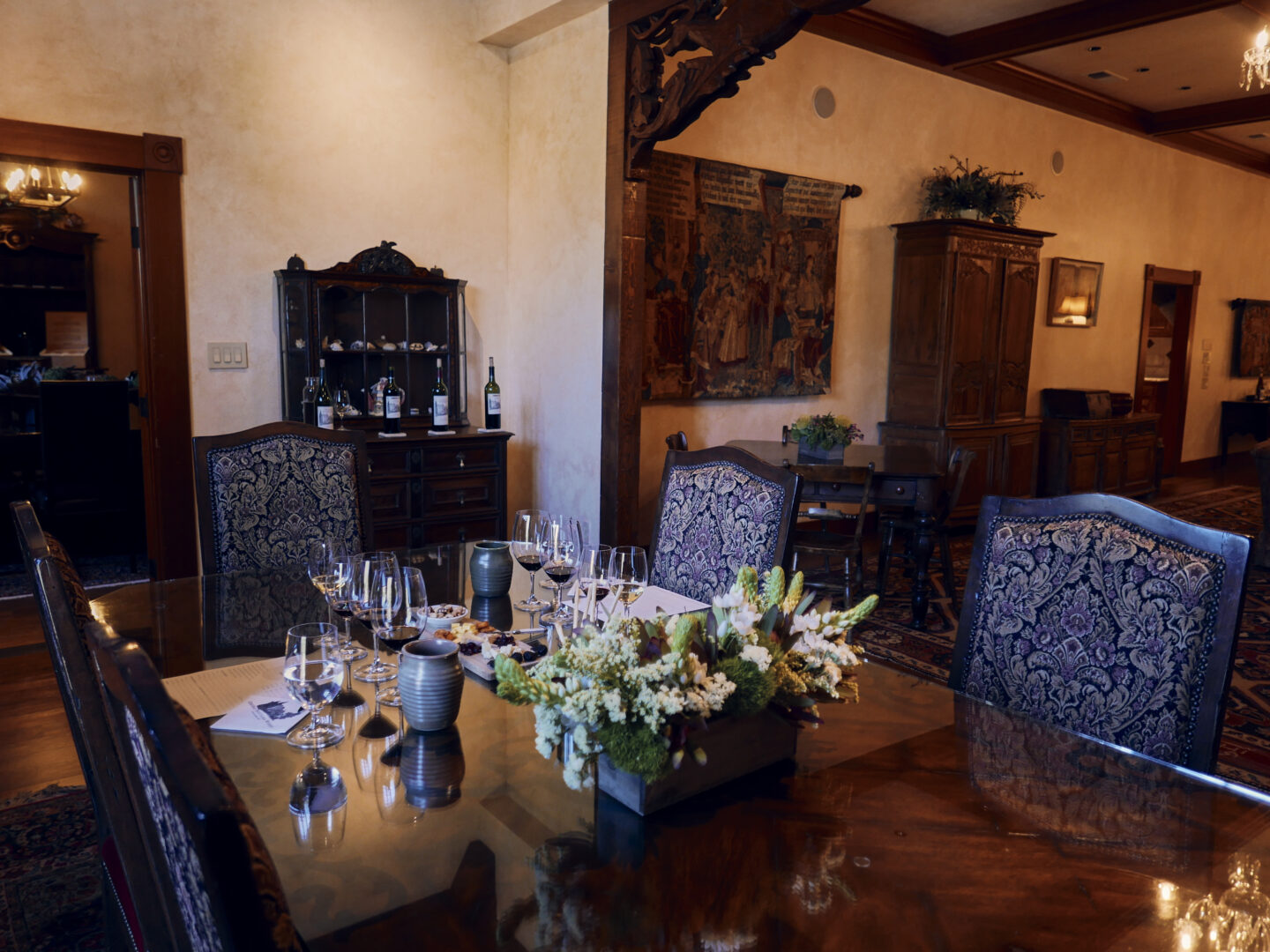
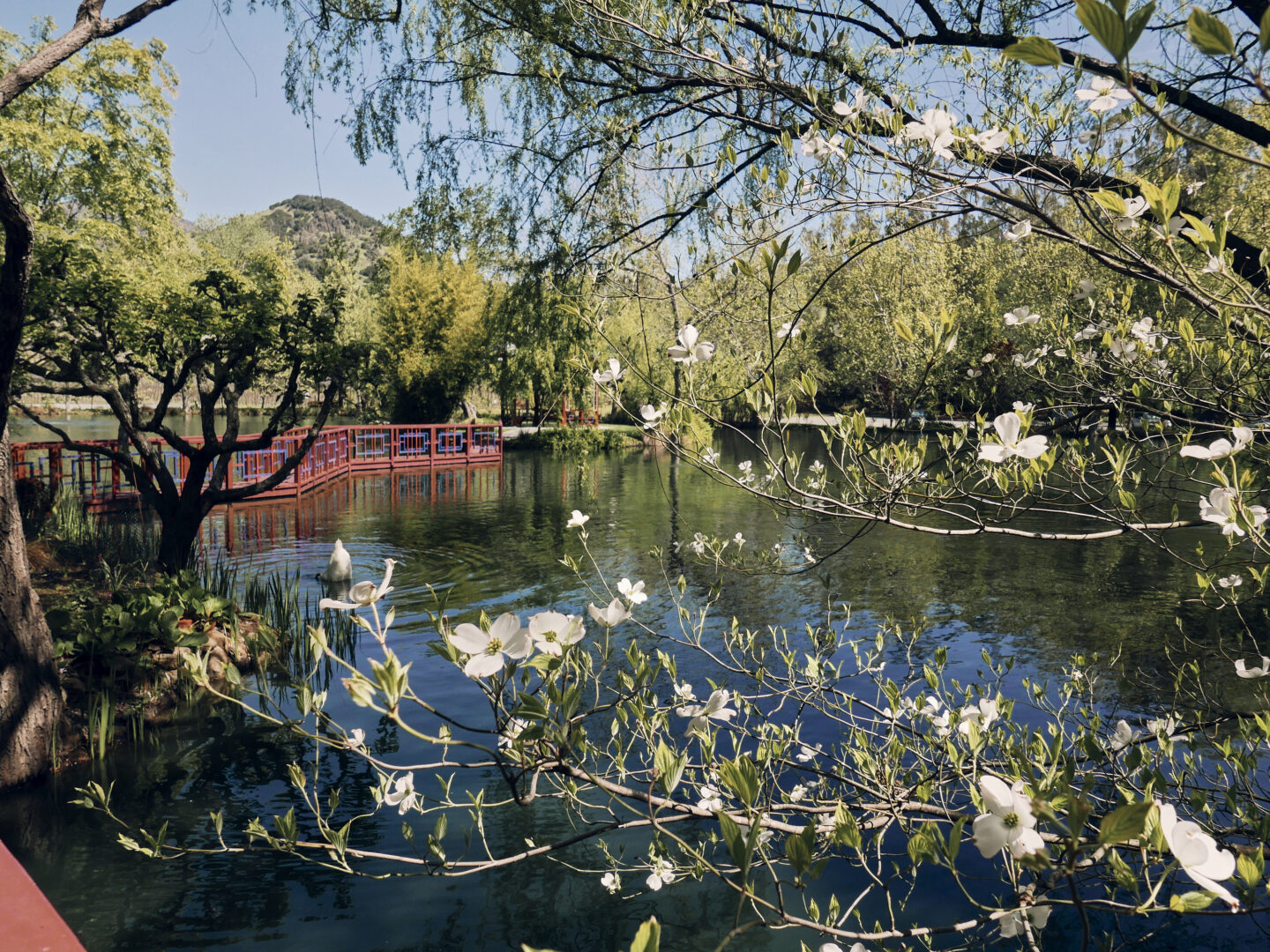
But a visit to Chateau Montelena is not just about the wine. The winery, a stone castle etched into the hillside, offers breathtaking views of a tranquil Chinese garden with lush greenery and exotic flora. A sparkling pond serves as a home to graceful swans, their elegance adding a touch of magic to the scenic beauty. This peaceful setting perfectly complements the experience of tasting Chateau Montelena’s world-class wines, making it one of the best wineries in California.

#4: Inglenook
Established: 1879 (140+ years old)
Location: 1991 St Helena Hwy, Rutherford, CA 94573, United States
Inglenook, a historic winery in Rutherford, California, was founded by Gustave Niebaum in the late 19th century. Niebaum, a Finnish sea captain turned entrepreneur, used his wealth to purchase the Inglenook property and began cultivating vineyards with European cuttings, including Cabernet Sauvignon and Merlot. This marked some of the first plantings of these varieties in Napa Valley. He also built a state-of-the-art winery, known as the Chateau, that incorporated innovative techniques such as gravity-flow and grape-sorting tables. The winery quickly gained international acclaim, earning awards at global expositions.
After Niebaum’s death, the reins of Inglenook were handed over to his grandnephew John Daniel Jr. Under his stewardship, Inglenook wines continued to thrive, garnering numerous awards and accolades. However, financial difficulties led to the sale of the brand and winery, which then went through a period of corporate ownership that prioritized quantity over quality.
In 1975, Francis and Eleanor Coppola (yes, the ones you’re thinking of!) purchased part of the original estate with a vision to restore its esteemed reputation. They established the Niebaum-Coppola Estate Winery and eventually reacquired the Inglenook name and trademark.
Today, Inglenook is renowned for its signature wine, Rubicon, a red Bordeaux-style blend, first produced in 1978. The winery also has other remarkable wines, such as the Inglenook Cabernet Sauvignon, celebrated for its complexity and age-worthiness.
The visitors to Inglenook can savour not only its exceptional wines but also the rich history that permeates the estate. From its stunning chateau and beautifully manicured vineyards to its extensive wine caves, Inglenook offers an immersive journey into Napa Valley’s storied past.
#3: Beringer Vineyards
Established: 1876; 140+ years old
Location: 2000 Main St, St Helena, CA 94574, United States
Beringer Vineyards, situated in the heart of St. Helena, California, holds the esteemed title of being “the oldest continuously operating winery in the Napa Valley”.
The vineyard was established in 1876 by German immigrants Jacob and Frederick Beringer. They purchased 215 acres of land in St. Helena, marking the beginning of the Beringer estate. The brothers brought with them their Old World winemaking knowledge, which they combined with the unique terroir of Napa Valley, resulting in the production of around 40,000 gallons of wine in their first harvest and crush.
Notably, Beringer was one of the few wineries that remained operational during Prohibition, producing sacramental wine.
Known for its broad range of wines, Beringer Vineyards produces everything from popular table wines to premium single-vineyard bottlings. Among its most celebrated offerings are the Private Reserve Cabernet Sauvignon, a highly acclaimed wine known for its complexity and ageing potential, and the Nightingale, a special French Sauternes-style wine produced in honour of Myron Nightingale, Beringer’s winemaker from 1971 to 1989.
For any wine lover exploring the oldest wineries of Napa, a visit to Beringer Vineyards is absolutely essential.
#2: Schramsberg Vineyards
Established: 1862 (150+ years old)
Location: 1400 Schramsberg Rd, Calistoga, CA 94515, United States
Schramsberg Wines, nestled on the slopes of Diamond Mountain in Napa Valley, was founded by Jacob Schram in 1862. A German immigrant, Schram established his winery and planted vineyards, making it one of the earliest hillside vineyards in Napa.
The estate flourished under his stewardship, producing up to 12,000 cases of wine annually by the late 19th century. However, it fell into disrepair following Schram’s death and Prohibition.
In 1965, Jack and Jamie Davies purchased the derelict property with the aim of reviving its former glory. They shifted the focus from still wines to sparkling wines, with the goal of creating “America’s most prestigious, select and admired sparkling wine”.
The Davies’ commitment to quality and innovation led them to study traditional French methods and adapt them to Napa’s unique conditions.
Schramsberg’s signature wine, the Blanc de Blancs, emerged as their crowning achievement. This sparkling wine, made from Chardonnay grapes and aged on the yeast for four years, gained international fame when it was served at the historic “Toast to Peace” dinner between President Richard Nixon and Premier Zhou En-lai in Beijing, China. This was a landmark moment, marking the first time an American wine had been served at any White House or State event.
Today, Schramsberg continues to uphold its reputation as a leading producer of fine sparkling wines in the United States and remains a must-visit destination for any wine enthusiast touring the historic Napa wineries.
Visitors can expect a variety of tour and tasting options, where they can choose from a range of experiences including the Cave Tour with tastings, featuring either all sparkling wines, a mix of sparkling and red wines, or a reserve wine and cheese pairing. They also offer private cave tours with custom tastings and tasting-only options for those who prefer a shorter experience.
NOTE: Reservations are a must due to the limited number of guests they can accommodate each day.
#1: Charles Krug Winery
Established: 1861 (150+ years old)
Location: 2800 Main St, St Helena, CA 94574, United States
The Charles Krug Winery, the oldest winery in Napa Valley, was established by Charles Krug, a Prussian immigrant, in 1861. Krug, a visionary in the wine industry, converted 540 acres of prime Napa Valley land into what would become the region’s first winery, pioneering the development of California’s world-renowned wine industry. Not only did he build the first tasting room in California, open to the public, but he also set new standards for the practice of wine tasting that are still followed today.
The winery underwent a significant change in 1943 when it was acquired by Cesare and Rosa Mondavi, an Italian immigrant family. Their sons, Peter and Robert, helped to further the legacy of innovation and quality that Krug had initiated. They introduced many advancements in the winemaking process, including being the first in Napa Valley to use imported French oak barrels as part of their red wine ageing protocols.
Under the Mondavi family’s leadership, Charles Krug Winery has continued to thrive, producing wines that are recognized for their balance and classic expressions of Napa Valley terroir. Among their diverse portfolio of wines, the signature Cabernet Sauvignon stands out for its particular acclaim.
Today, the winery continues to be a family affair, with the third and fourth generations of the Mondavi family preserving its rich heritage while embracing sustainable farming practices. The winery’s picturesque estate offers a range of experiences for visitors, from tastings of their award-winning wines to tours of their historic Redwood Cellar and Carriage House.
Needless to say, no tour of the oldest wineries in Napa Valley would be complete without Charles Krug Winery.
FAQs | Napa Valley Wineries
What Is the Oldest Winery In Napa?
The oldest winery in Napa Valley is Charles Krug, established in 1861. As the first commercial winery in the region, it pioneered the wine industry in Napa, setting the stage for its future as a premier wine-producing area.
How Many Wineries Are In Napa Valley?
Napa County is home to over 500 wineries, collectively producing over 1,000 different wine brands.
What Is the Oldest Winery In California?
Founded in 1856, California’s oldest winery D’Agostini Winery isn’t actually in Napa but in Shenandoah Valley, Plymouth. Close behind is Sonoma’s Buena Vista Winery, established in 1857 by Agoston Haraszthy.

Mapped: Oldest Wineries in Napa Valley
Napa Valley’s oldest wineries are a treasure trove of captivating stories and exceptional wines.
From Charles Krug, the first commercial winery in the region, to Beringer Vineyards, the oldest continuously operating one, and Freemark Abbey, the first female-owned one, these wineries have helped shape Napa into the world-renowned wine region it is today.
These vineyards are not only symbols of resilience and dedication but also gateways to experiencing the unique character of Napa Valley wines. So, as you prepare for your next trip to this beautiful wine country, don’t forget to put these historic wineries on your must-visit list.
Have a glance at the map below to find their locations and start planning your journey:
LIKE THIS POST? PIN IT FOR LATER:


12 Oldest Wineries in Napa Valley
#1: Charles Krug Winery (Est. 1861)
#2: Schramsberg Vineyards (Est. 1862)
#3: Beringer Vineyards (Est. 1876)
#4: Inglenook (Est. 1879)
#5: Chateau Montelena (Est. 1882)
#6: Far Niente Winery (Est. 1885)
#7: Freemark Abbey Winery (Est. 1886)
#8: Trefethen Family Winery (Est. 1886)
#9: Nichelini Family Winery (Est. 1890)
#10: Stags’ Leap Winery (Est. 1893)
#11: Beaulieu Vineyards (Est. 1900)
#12: Hendry Winery (Est. 1939)