Last Updated on May 11, 2026 by Goya
If you’re looking for a fun day trip from Madrid, the Royal Site of San Lorenzo de El Escorial is the perfect choice for anyone interested in exploring one of Spain’s most iconic palaces.
In this complete guide to one of Spain’s most famous royal sites, Victoria from Guide Your Travel shares everything you need to know before you go — including how to get to San Lorenzo de El Escorial from Madrid, where to buy tickets, and how Spanish history is intricately connected to this extraordinary monastery.

What is San Lorenzo de El Escorial?
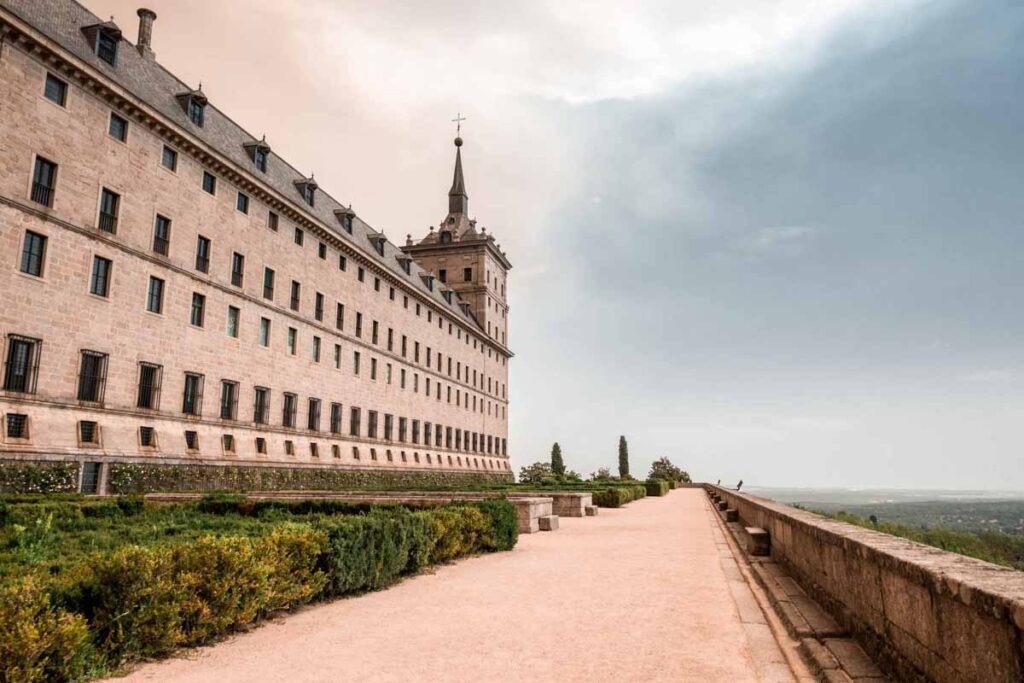
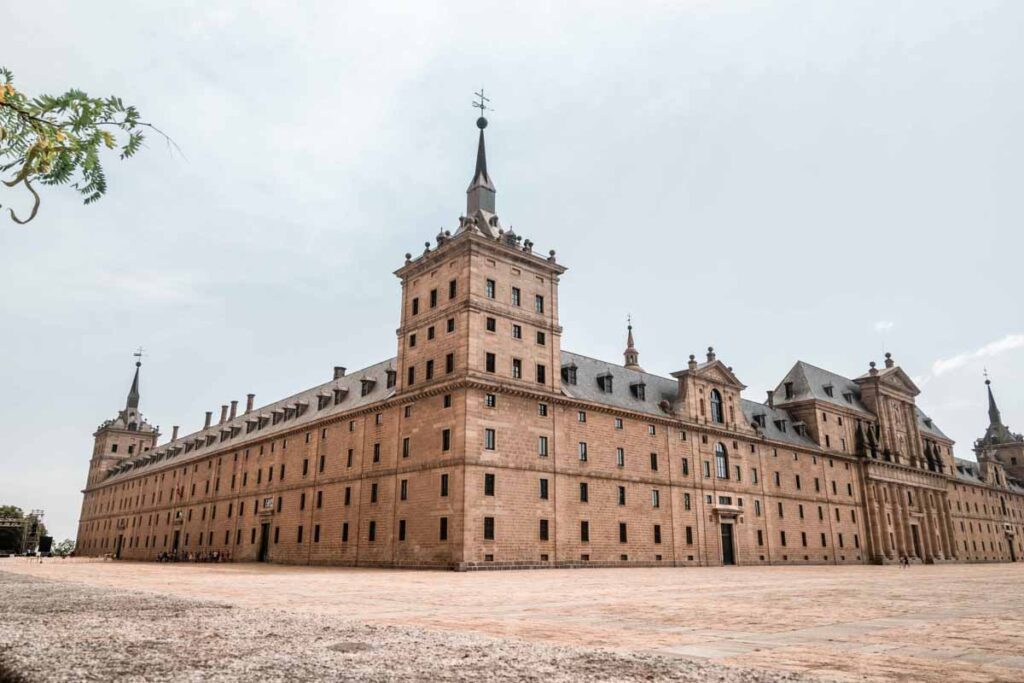
The Royal Seat of San Lorenzo de El Escorial is a 16th-century monastery in Renaissance style located around 55 kilometres northwest of Madrid (about an hour drive from the city centre) in a rural area with beautiful hills and small mountains.
The monastery sits at an altitude of 1028 metres in the Guadarrama mountain range, which provides the perfect scenic backdrop to the historic site, which has more than 33,000 square metres and is one of the most impressive Spanish palaces.
So it comes as no surprise that it is also one of the UNESCO World Heritage Sites in Spain and a popular day trip destination from Madrid.
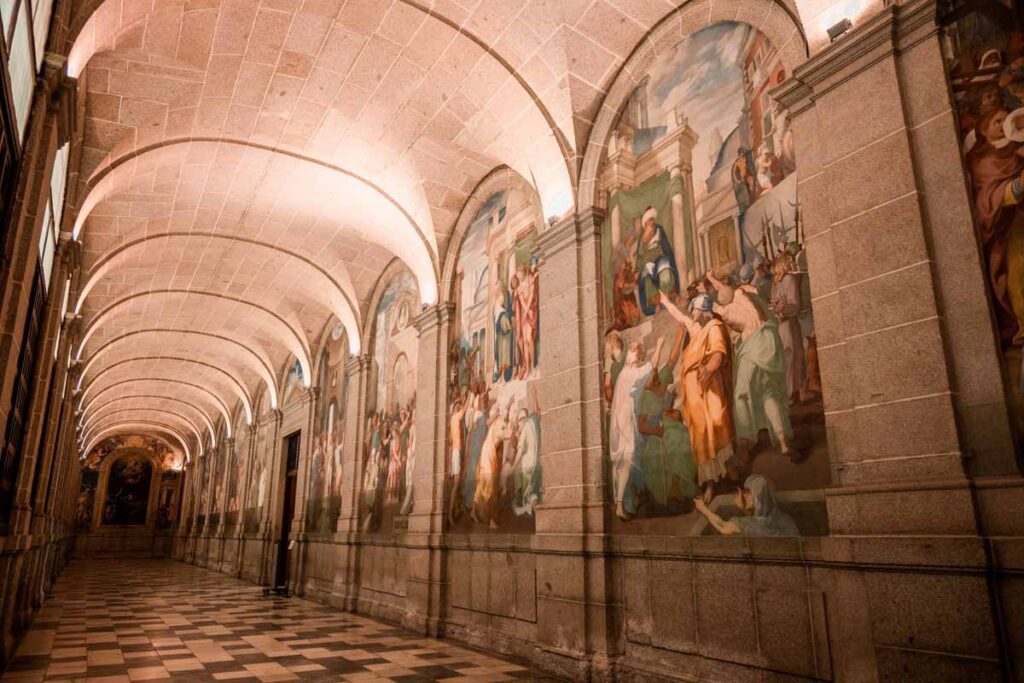
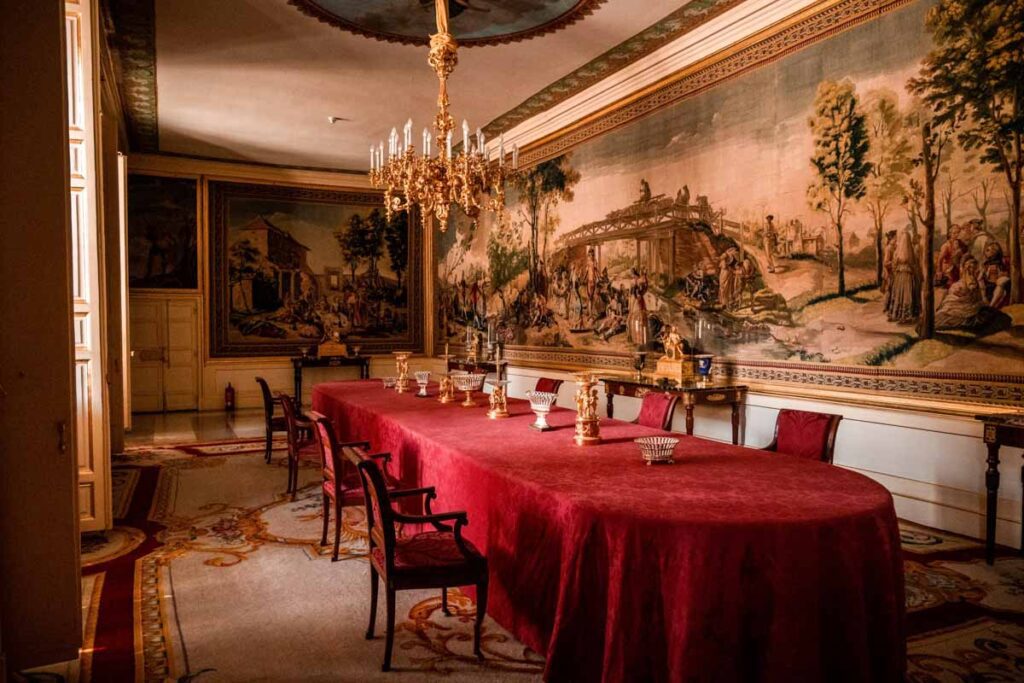
Parts of the Monasterio de San Lorenzo de el Escorial have been transformed into a museum where visitors can marvel at ancient artefacts, historic architecture and lots of art.
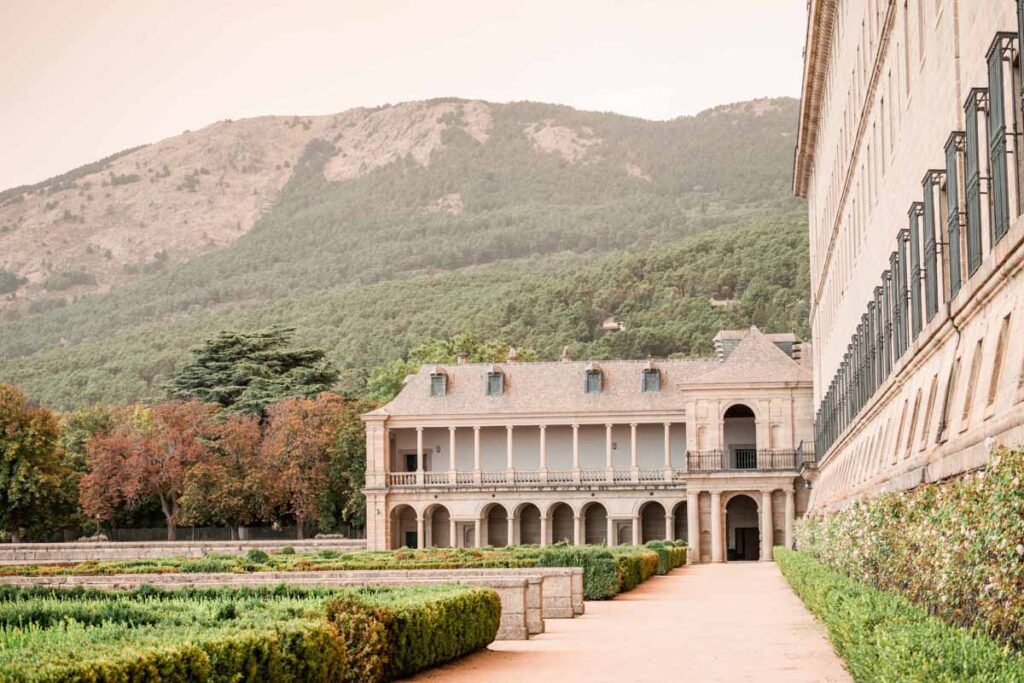
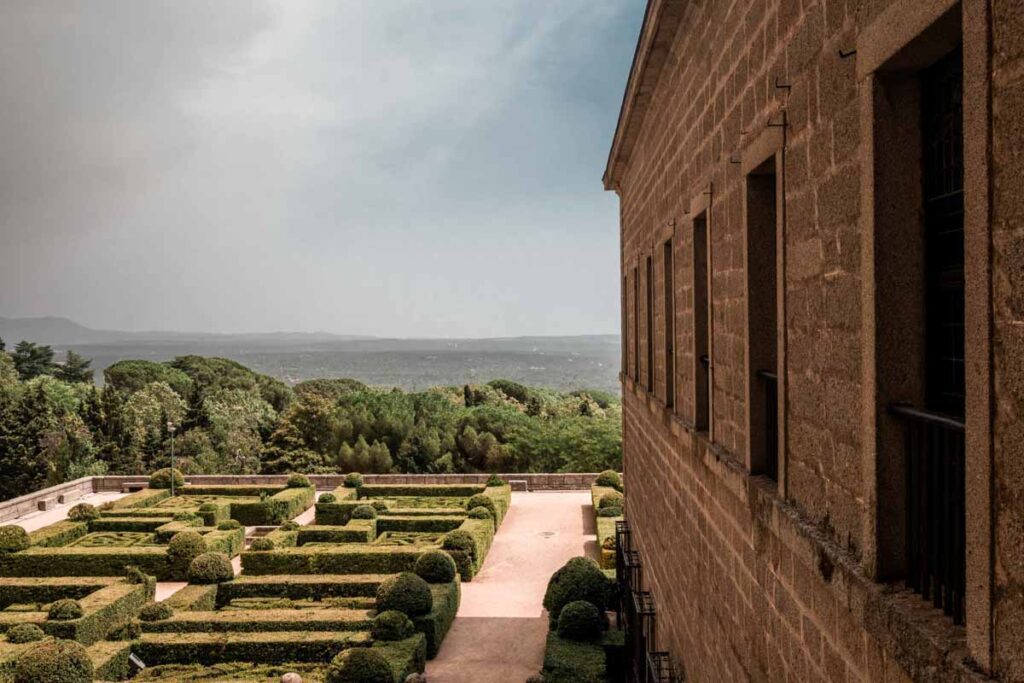
Jardín de Los Frailes, which are the formal gardens of El Escorial, are equally as beautiful and well worth a visit.
If you think of El Escorial as frozen in time… think again.
Quietly (and rather brilliantly), it’s just undergone a multi-million-euro revamp — and it genuinely changes how you experience it. Here’s what that means for you:
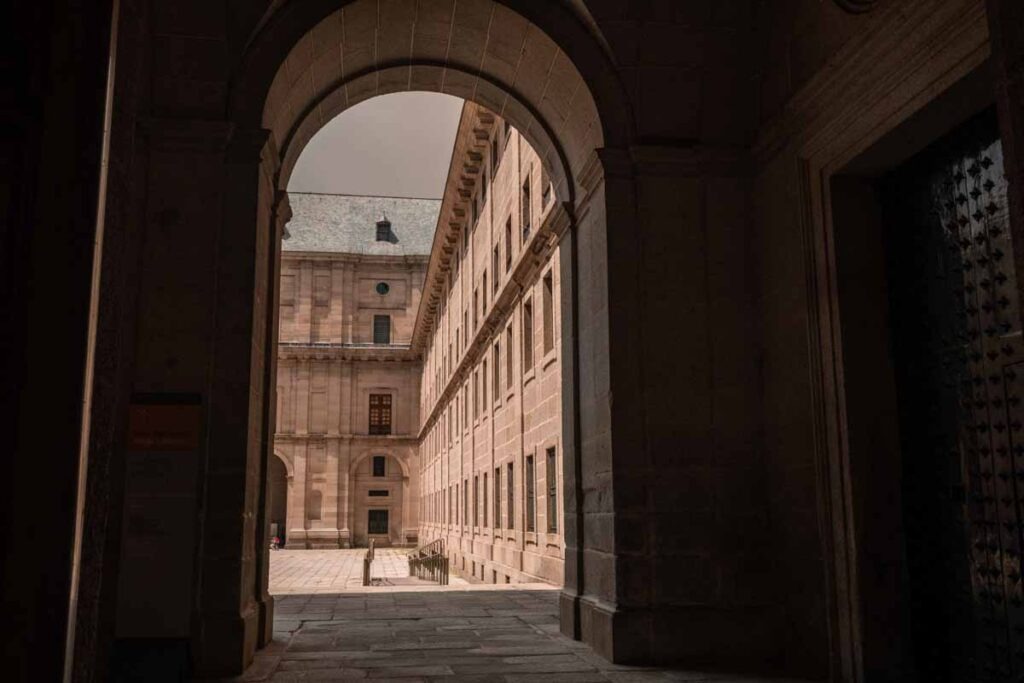
You now enter through the Patio de los Reyes
The arrival has been rethought, so you step in via one of the most dramatic façades in the entire complex. It feels intentional. Grand. A little theatrical. Very Philip II.
Spaces that were closed for decades are reopening
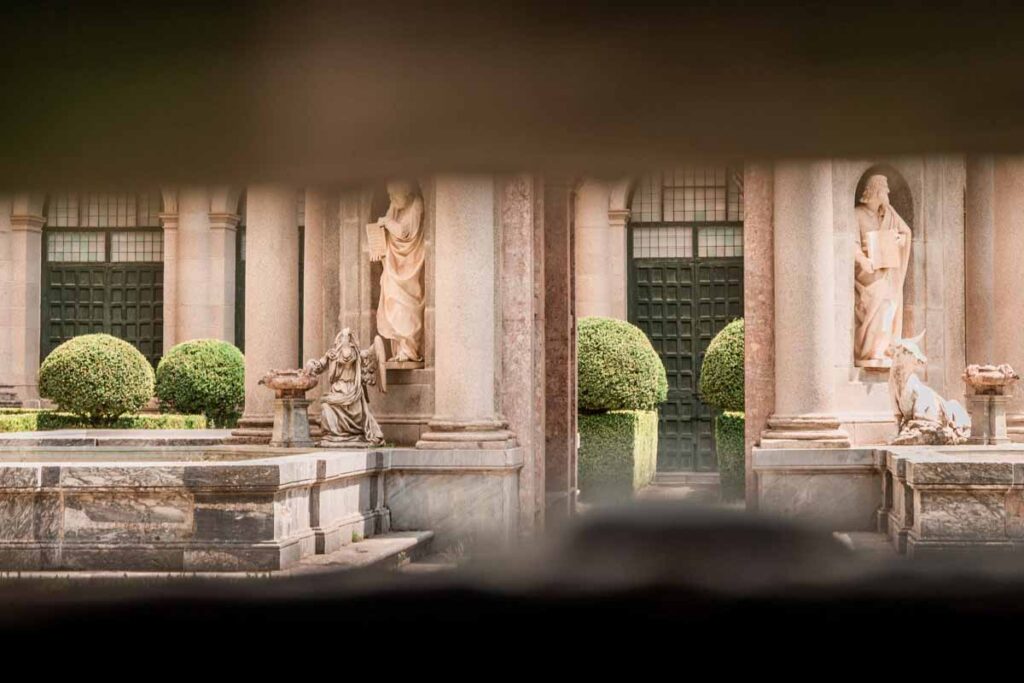
Parts of the cloister — including the beautiful Patio de los Evangelistas — are being brought back into the visitor route. That means more of the monastery’s internal rhythm and symmetry is finally visible again.
Reimagined Art Galleries
Long-dormant galleries are reopening with a clearer narrative flow. The greats — Titian, Velázquez, El Greco, Tintoretto — now have more breathing space. It’s less corridor, more considered curation.
Behind-the-scenes upgrades you’ll actually feel
Improved lighting (which makes a surprising difference when you’re staring at 16th-century canvases), sustainability measures, and infrastructure improvements mean the whole experience feels sharper.
So if you were already planning a day trip from Madrid, this makes the timing feel rather perfect!
History of El Escorial
El Escorial has a rich and interesting history.
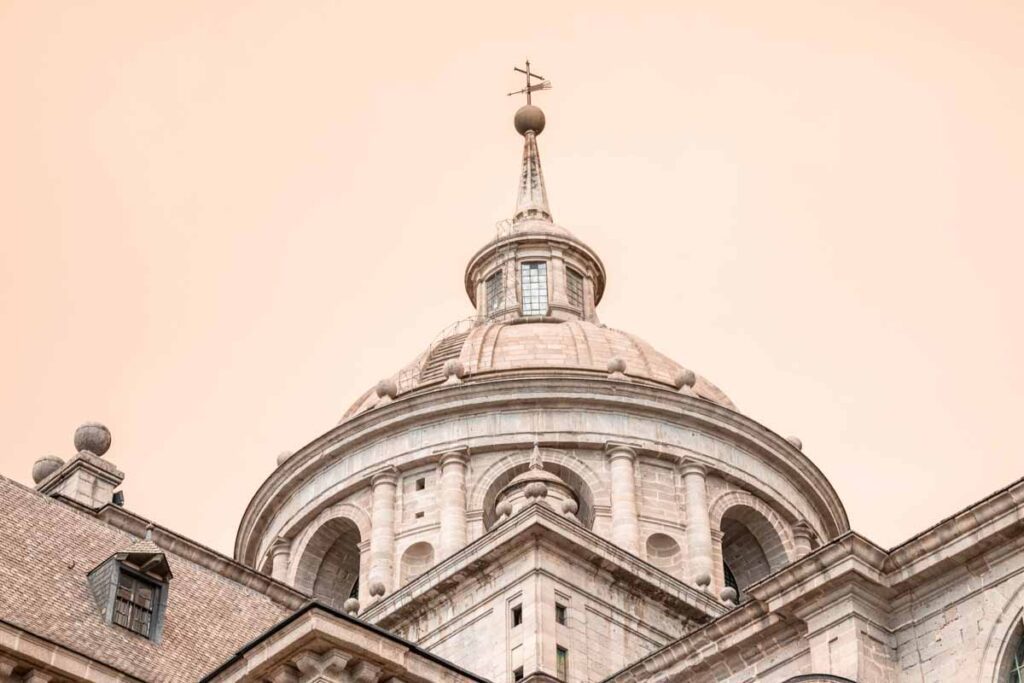
Built between 1563 and 1584 at the request of King Philip II, Monasterio de San Lorenzo de el Escorial is considered the largest Renaissance building in the world.
The King commissioned the architect Juan Bautista de Toledo, who had previously worked as Michelangelo’s assistant in the Basilica of Saint Peter in the Vatican (another perfect day trip destination!), to plan this impressive royal site.
Unfortunately, he passed away in 1967 before El Escorial could be completed, and the job was given to Juan de Herrera, who gave the complex his signature style, which involves a lot of symmetrical features.
King Philip II loved nature and the calm it brought him, so he put a special focus on the gardens of the monastery, which he used for meditation.
But El Escorial was not only born out of serenity and contemplation. The construction was also tied to a pivotal political moment (Philip commissioned the complex following his victory over the French at the Battle of San Quintín), and the death of his father, Emperor Charles V, who passed away, leaving unclear instructions about his burial wishes.
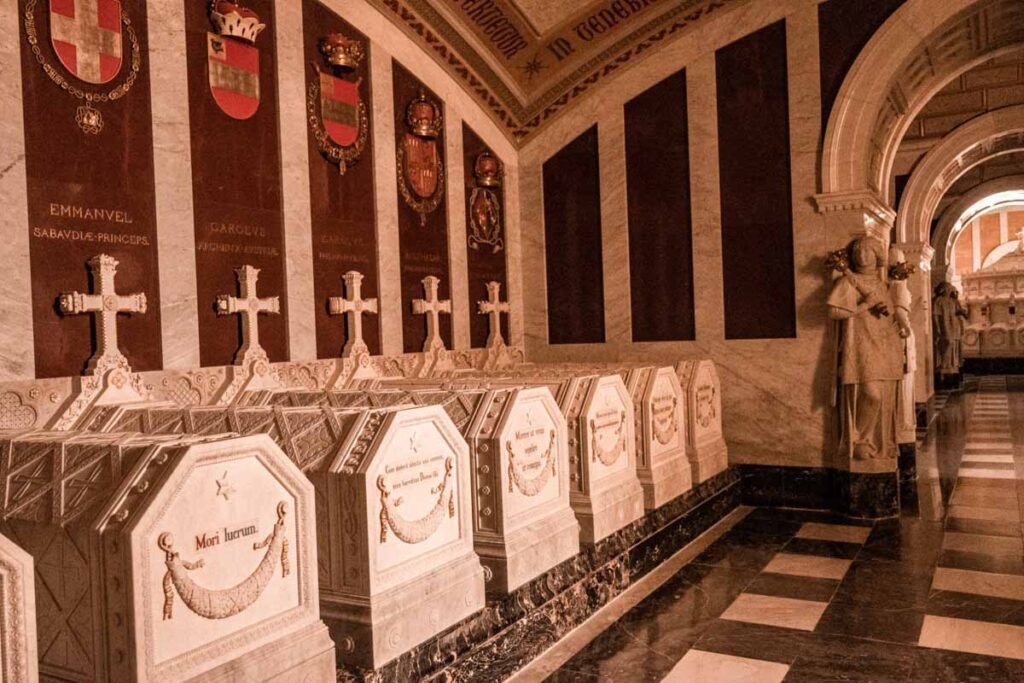
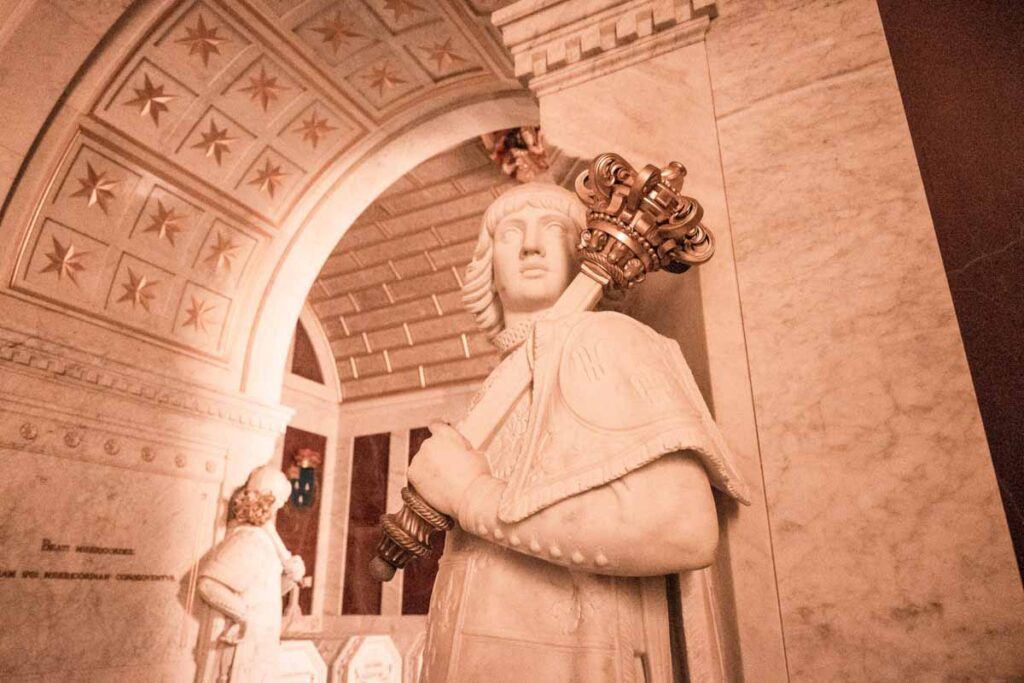
In response, Philip decided to create a dynastic pantheon — a permanent resting place for Spanish royalty. To this day, members of the Spanish royal family continue to be buried here, and the crypt of San Lorenzo de El Escorial remains open to visitors.
El Escorial was a personal project for King Philip, and he frequently visited the construction site and oversaw the plans himself, which was highly unusual during this part of history.
Over time, El Escorial has had many purposes. It was a royal residence (although King Philip was the only royal to ever live there permanently), a boarding school, a hospital, a religious centre and a monastery.
The Augustinian monks still live in El Escorial today and are a living piece of history.
In November of 1984, San Lorenzo de el Escorial was declared a UNESCO World Heritage Site of Spain, and today it attracts more than 500,000 annual visitors.
Best Guided Tour of El Escorial
If you want to learn more about the history of this beautiful palace, you should join a guided tour with an experienced guide.
There are several options, but a firm favourite is a day trip tour from Madrid, which, in addition to entrance tickets and transport, also includes the Basilica of the Valley of the Fallen.
It is the perfect way to travel through the time of Felipe II to today, and learn about the Spanish Civil War.
Plus, if you don’t have a car, this is also one of the cheapest and most convenient options for visiting El Escorial, with the added benefit of having a guide with you.
Tour groups are small, and the price includes pretty much everything but the meals, so you won’t have to worry about planning anything.
El Escorial Opening Hours
The opening hours for El Escorial changed depending on the season, and it’s always closed on Mondays.
Special closing days change from year to year but usually include: January 1st, January 6th, May 1st, December 24th, December 25th and December 31st.
The ticket office closes one hour before closing time, so make sure you arrive early, or they will not let you enter.
QUICK TIP
Always check the current opening hours before going on your Madrid to El Escorial day trip in case there is an unexpected public holiday.
How to Get to El Escorial from Madrid
The palace is located less than 50 kilometres from the Spanish capital. That means El Escorial is relatively easy to reach from Madrid, and you can even get there by public transport, either by train or bus.
Driving will be quicker and slightly more convenient, though.
Driving from Madrid to El Escorial
If you have access to a car in Madrid during your time in Spain, it’s highly recommended to drive to El Escorial. The trip will be faster and more comfortable than the bus, and you’ll be flexible in choosing how long you want to stay.
The drive takes around one hour, and you can stop at other notable attractions on your way, such as the ones listed at the end of this article.
Driving in Spain is relatively easy in general; however, the highway system in large cities like Madrid can be confusing. Take your time and go slowly to avoid accidents.
Wondering where to park close to the Monasterio de San Lorenzo de el Escorial? There are lots of parking lots to choose from close to the palace. Victoria recommends the Public Parking BENCAR EGS, S.A parking garage, which “lies literally right next to El Escorial and next to a nice plaza with restaurants”.
“Finding free parking close to El Escorial is very difficult. Don’t try to park somewhere on the street without paying, as you’ll almost be guaranteed to be fined. The local police are very strict since so many tourists visit this area, and they’re used to finding illegally parked cars.”
Taking the Bus from Madrid to El Escorial
There is a great bus connection from Madrid, the capital of Spain, to San Lorenzo de el Escorial. Get the ALSA 664 (or 661/687) bus, which departs from Moncloa Bus Station and takes you to a bus stop around 500 metres from the monastery.
Tickets for the bus to El Escorial are very affordable, and the ride takes just under 1.5 hours.
The bus departs as frequently as every 10 minutes, and the last one from El Escorial back to Madrid leaves at 8:30 pm on most days, although you should always double-check the schedule on the day.
Taking the Train from Madrid to El Escorial
You can also take the train from Madrid to El Escorial, which is more comfortable than the bus but involves a bit more walking. The C3 train departs from Puerta de Atocha (also Sol and Nuevos Ministerios) and takes you to El Escorial.
The ride takes just over an hour, with the walk from the train station to the monastery taking around 20 minutes (1.8 kilometres).
QUICK TIP
Make sure to double-check if this train is operating. The schedules can be a bit unreliable sometimes.
Best Time to Visit El Escorial
You can visit El Escorial year-round, and there is no single “best” time to go.
Since the monastery is located in a mountainous area that lies higher than Madrid, it’s not uncommon to encounter snow in winter. Keep in mind that public transport may be impacted if weather conditions are extreme.
During winter, autumn and spring, El Escorial is usually less crowded than in summer, when most tourists visit Spain.
Winter is actually one of the best times to experience Madrid’s cultural side.
👉 Discover more European winter break ideas!
The gardens of El Escorial are at their most beautiful in late spring and summer.
The royal site tends to be most crowded on summer weekends, especially in June and September. If you’re able to, visit during the week for a quieter experience.
Tour buses typically arrive around noon or early afternoon, so aim to arrive in the morning to avoid the crowds.
How Long to Spend at El Escorial?
The Monasterio de San Lorenzo de el Escorial is very large with lots of areas to explore. Plan to spend at least two to three hours here if you want to take your time and see everything, plus time to spend at the gardens.
You’ll need an entire day if you’re visiting El Escorial from Madrid, especially if you want to take time to learn about the history of this fascinating place.
What to Bring to El Escorial?
During winter, parts of El Escorial might be a bit chilly, so make sure to bring a jacket even though you’ll be inside.
Even though taking photos is prohibited in many parts of the monastery, you are allowed to bring your camera. While you won’t be able to use it inside the monastery, you might still want to bring items like a tripod or drone, which you could use later on after your visit.
The gardens are a beautiful space for taking photos, and you should be able to fly your drone nearby, although I would avoid doing it too close to the monastery.
Since you’ll be walking through the many rooms for quite a few hours, make sure to bring water and don’t arrive hungry. It’ll be some time before you get a chance for a snack.
Only bring a small bag to avoid having to leave it at the cloakroom.
What to Leave at Home
Food and Drinks
Officially, food and drinks are not permitted inside the monastery. While enforcement can feel relaxed, it’s best to be respectful — avoid unpacking snacks during your visit and definitely skip the idea of a picnic.
A small water bottle for the occasional sip is generally fine, but keep it discreet.
Backpacks and large bags
Bags larger than 30 cm x 20 cm x 20 cm are technically not allowed inside. In practice, enforcement can vary — but it’s safest to pack light to avoid any issues.
If needed, there is a cloakroom where you can store larger items.
You’ll also be asked to carry backpacks and handbags in front of you while walking through the monastery to help prevent accidental damage to artworks and interiors.
El Escorial Tickets
There is an entrance fee to visit the Monasterio de San Lorenzo de El Escorial, although you can access the Jardín de los Frailes (the monastery gardens) free of charge.
Ticket categories typically include:
- General admission
- Reduced fares for children and seniors
- Student discounts (ID required)
- Free entry for visitors with disabilities
- Special provisions for unemployed visitors (Spanish documentation required)
- Optional audio guide
For the most up-to-date ticket prices, availability and conditions, check the official website.
Is There Free Entry to El Escorial?
Yes — there is limited free entry on select days and times for:
- EU citizens
- Residents
- Work permit holders
- Latin American citizens
Valid ID is required, and this applies to unguided visits only. Free tickets must be requested in person at the ticket office.
As these conditions can change, always confirm details on the official website before visiting.
Should You Buy El Escorial Tickets in Advance?
You can buy tickets either online via the official website or in person at the monastery ticket office.
If you already know your travel dates — especially during summer weekends or holidays — booking online is recommended. Visitors who purchase in advance have access to a priority line, which is usually faster than buying on arrival.
Tickets for El Escorial rarely sell out, but if they do, it’s usually on weekends during the summer. If you’ll be visiting during this time, it might be better to prebook. During the week, you should be fine.
If you’re interested in joining a guided tour, booking your tickets online is highly recommended, as these do sell out even during the week and in winter.
Online tickets require selecting a timed entry slot (usually in 15-minute intervals), but there is no limit on how long you can stay once inside. In general, the staff is very lenient in case you arrive early or late, but on very busy days, they might enforce these rules, so make sure you can actually arrive on time.
Tickets are typically released up to 90 days in advance.
QUICK TIP
There are several websites online selling tickets to El Escorial, and prices may vary. We would recommend using the official website for peace of mind, or Get Your Guide, which sometimes has more tickets available if a certain day is already sold out.
Important Booking Details to Know
Before purchasing your El Escorial tickets online, keep the following in mind:
- Each online order must include at least one paid ticket. If you (or your group) are only eligible for free admission, you’ll need to request your ticket in person at the ticket office.
- A maximum of eight tickets can be purchased per transaction. Larger groups will need to place multiple orders.
- Audio guides can be added during the online booking process.
- Special group tickets are available but usually require documentation from an educational or recognised cultural institution. As a tourist, this option is unlikely to apply.
As policies can change, it’s always worth reviewing the terms carefully before completing your booking.
Other Things to See on a Day Trip to El Escorial
If you have more time in the area, make sure to stop by these hotspots.
Jardín de Los Frailes (Gardens)
The gardens of El Escorial are separate from the main complex and can be visited for free.
A lot of visitors miss out on this part of the monastery because the entrance is located on the other side of the building.
When standing in front of the entrance of the main building, head to the right around the corner and all the way to the back, where the entrance to the gardens is located.
The View Point
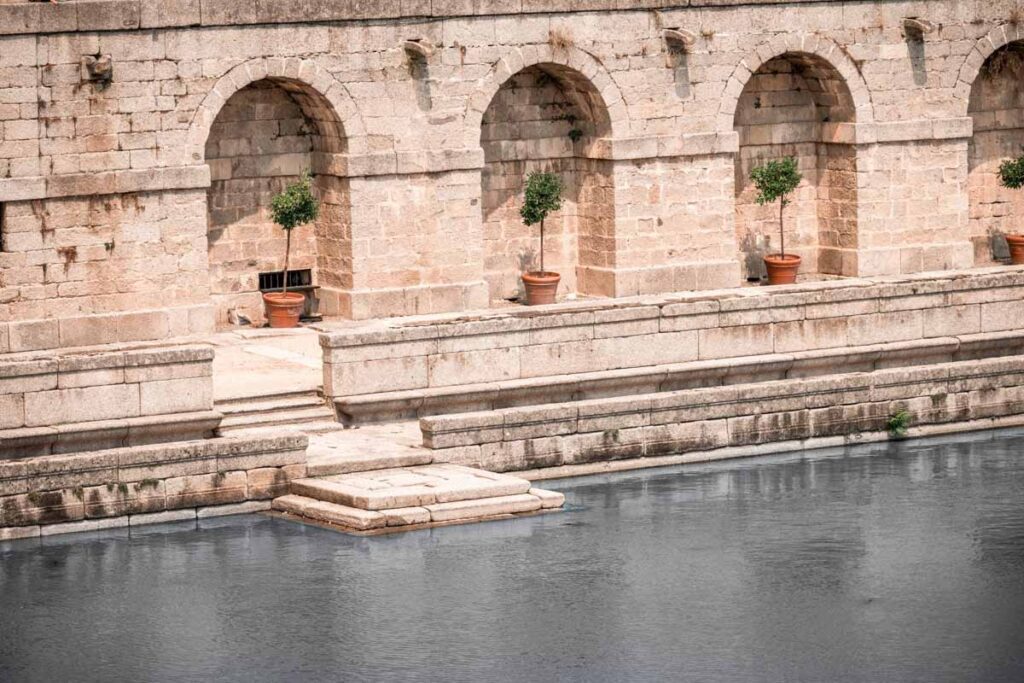
There is a beautiful viewpoint located behind the gardens of El Escorial. Instead of turning left to enter the gardens, go through the gates and walk straight until you can see water on your left.
The view of the palace is absolutely beautiful, and the walk is only about 2 minutes.
Which Is Better: The Royal Palace in Madrid or San Lorenzo de El Escorial?
Madrid is home to some of the best Spanish palaces. If you’re trying to decide which royal sites to visit during your limited time in the city, you should consider a few things.
While both palaces come with a similar price tag, El Escorial has slightly more to see than the Royal Palace.
The monastery is absolutely huge, and together with the adjacent gardens, you’ll be busy for hours. While the Royal Palace is also quite large, it won’t take as much time to see.
Victoria says: “In my opinion, though (this is very subjective), I think the Royal Palace might be slightly more impressive than El Escorial. It has beautiful and intricately decorated rooms, while El Escorial is not nearly as lavish.”
Seeing El Escorial will probably take an entire day if you factor in the time it takes to get there and back from the city. The Royal Palace is located in the heart of Madrid and won’t take as much time out of your day. If you’re short on time, it might be the better option. However, since it’s so easily accessible, it’s also a lot more crowded, while El Escorial is more peaceful and less touristy.
So which one should you see?
- Are you short on time and don’t want to go on a day trip from Madrid to El Escorial? Go see the Royal Palace.
- Are you interested in Spanish palaces and want an excuse to leave the city? Explore El Escorial and the beautiful surrounding area.
What Else to See Close to El Escorial
If you went all the way from Madrid to El Escorial on a day trip, you might want to stop by these attractions and things to do:
- Mirador Abantos – Beautiful viewpoint around 2.5 kilometres from San Lorenzo de El Escorial, with fantastic views of the monastery from above
- La Herrería Forest – Beautiful natural area close to El Escorial that is great for hiking
- Benedictine Abbey of the Holy Cross of the Valley of the Fallen – Impressive monastery with a large cross
- Casita del Príncipe – Beautiful royal residence that is part of El Escorial (note additional entrance fee)
- Village of San Lorenzo de El Escorial – A beautiful historic village with cafes and restaurants
FAQs: El Escorial
Visiting El Escorial
Is El Escorial Open to the Public?
Yes, El Escorial is open to visitors most days of the week but is typically closed on Mondays. Hours may vary on holidays, so it’s best to check the official website before your visit.
Where Is El Escorial?
El Escorial is located about 45–60 minutes northwest of Madrid in the town of San Lorenzo de El Escorial, at the base of the Sierra de Guadarrama mountains.
Is El Escorial Worth Visiting?
Yes, El Escorial is worth visiting if you’re interested in Spanish history, royal architecture, or UNESCO World Heritage Sites. Most visitors spend 2–3 hours exploring the monastery complex on a day trip from Madrid.
How Do You Get to El Escorial from Madrid?
You can reach El Escorial by Cercanías train, bus, or car from Madrid. The train takes about 45–60 minutes, followed by a 15–20 minute walk uphill to the monastery. You can also join a guided tour.
Can you Take Photos Inside El Escorial?
Photography is not allowed inside most areas of El Escorial, including the Royal Pantheon and library. Staff enforce the rules strictly, but you can take photos in the courtyards and exterior areas.

History of El Escorial
When Was El Escorial Built?
El Escorial was built between 1563 and 1584 under King Philip II during Spain’s Golden Age. Construction took over 20 years and was led by architects Juan Bautista de Toledo and Juan de Herrera.
Why Was El Escorial Built?
King Philip II commissioned El Escorial after his victory at the Battle of San Quintín in 1557. It was designed as a royal palace, monastery, basilica, library, and burial site for Spanish monarchs.
Why Is El Escorial Famous?
El Escorial is famous as one of the largest Renaissance buildings in Europe and as the burial site of many Spanish kings. It is also a UNESCO World Heritage Site and a symbol of Spain’s Golden Age.
Before You Go… Save This for Later 📌
Planning a Longer Spain Trip?
Madrid makes a fantastic base, but Spain’s beauty doesn’t stop there.
From royal monasteries like El Escorial to dramatic northern coastlines and historic cities, there’s so much more to explore.
👉 Read next: 15 Incredible Places to Visit in Northern Spain